
Last updated October 16, 2026
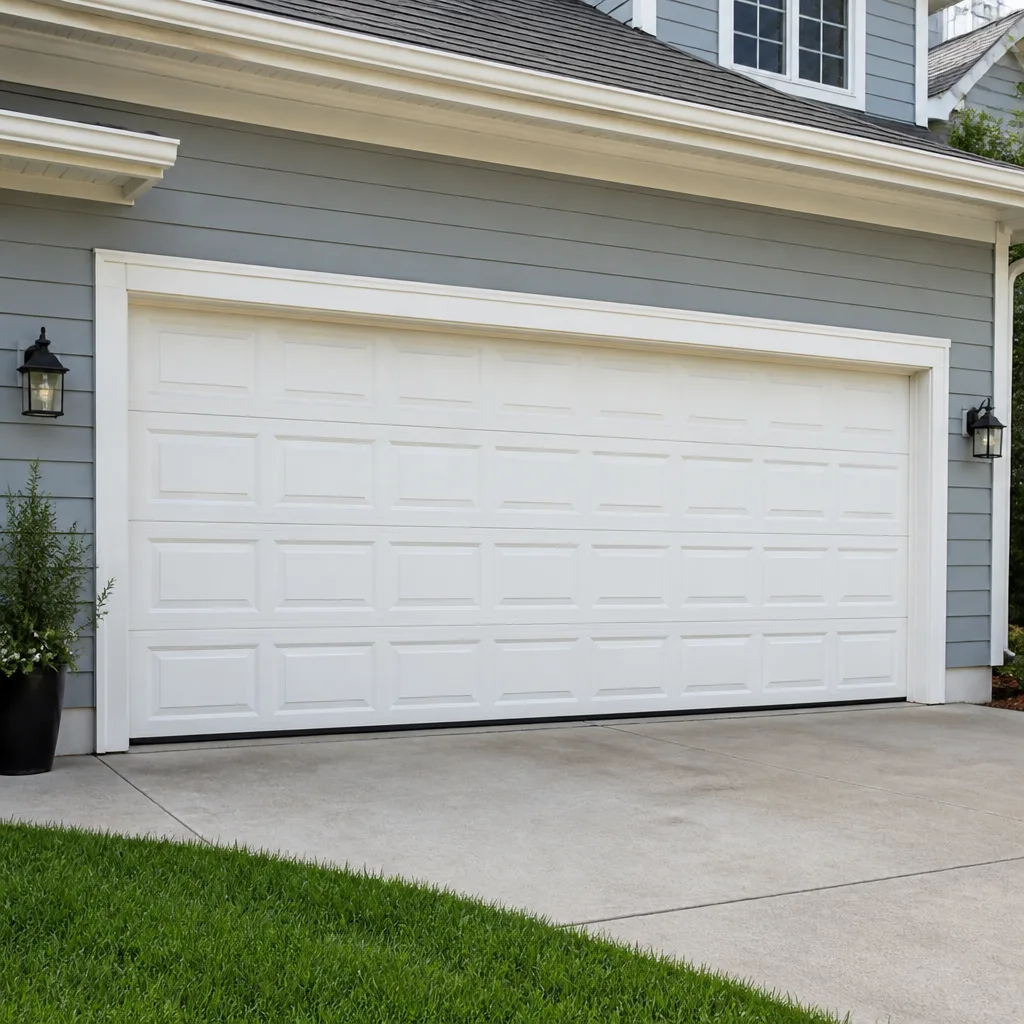 Raised-panel steel
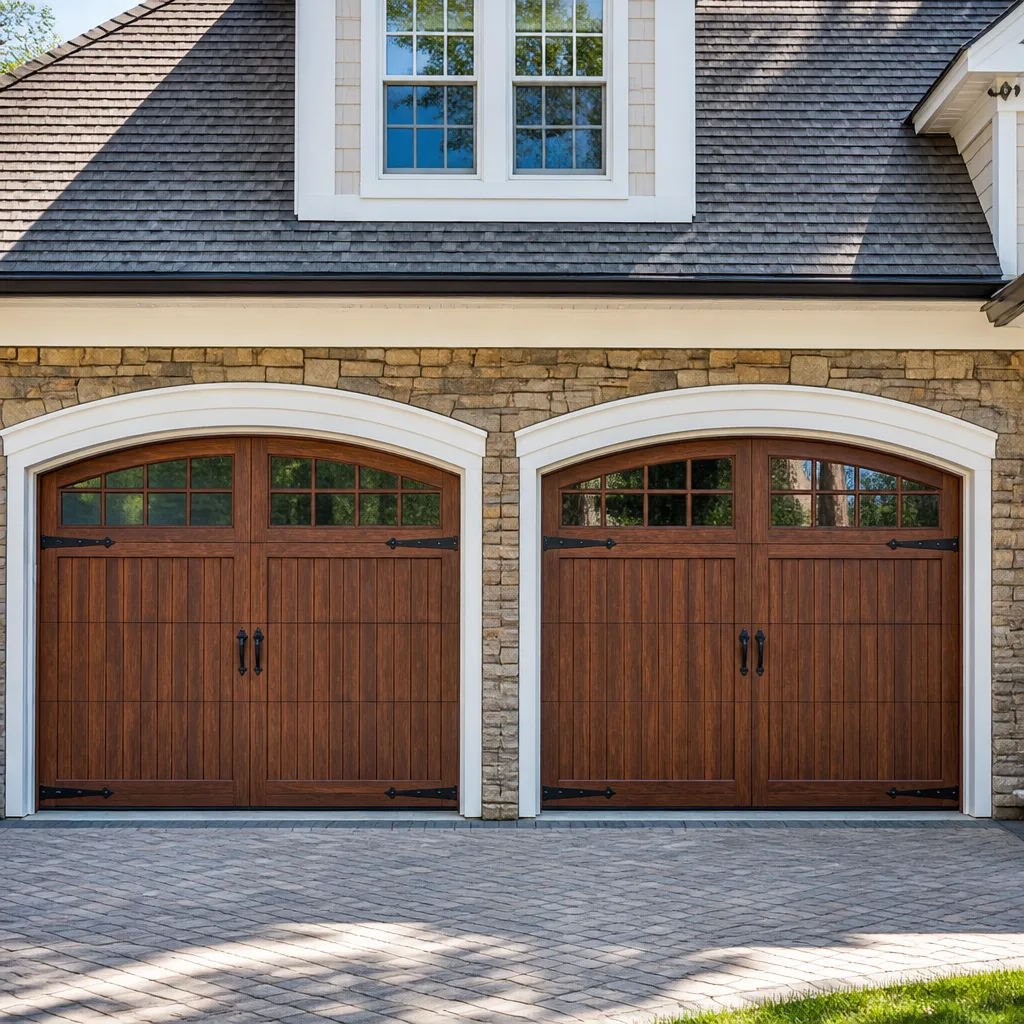 Carriage house
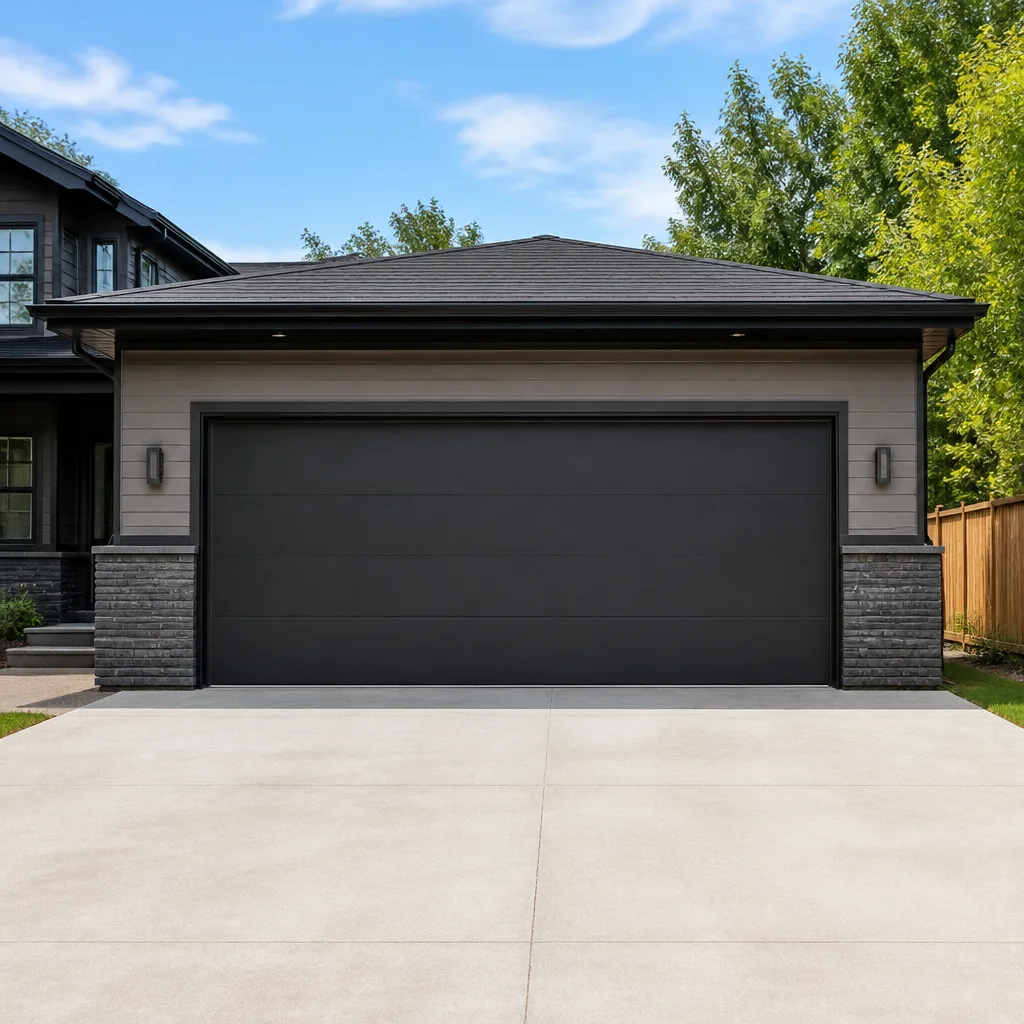 Modern flush
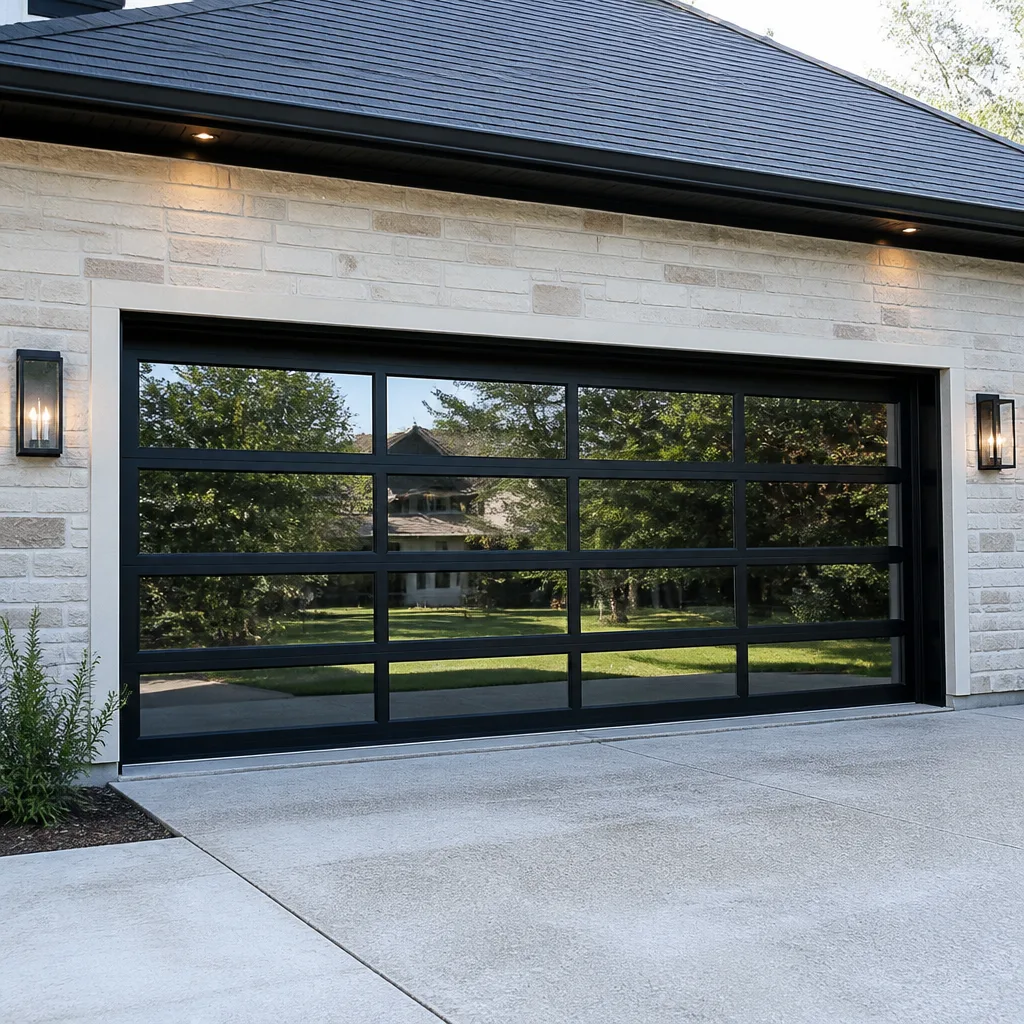 Full-view glass
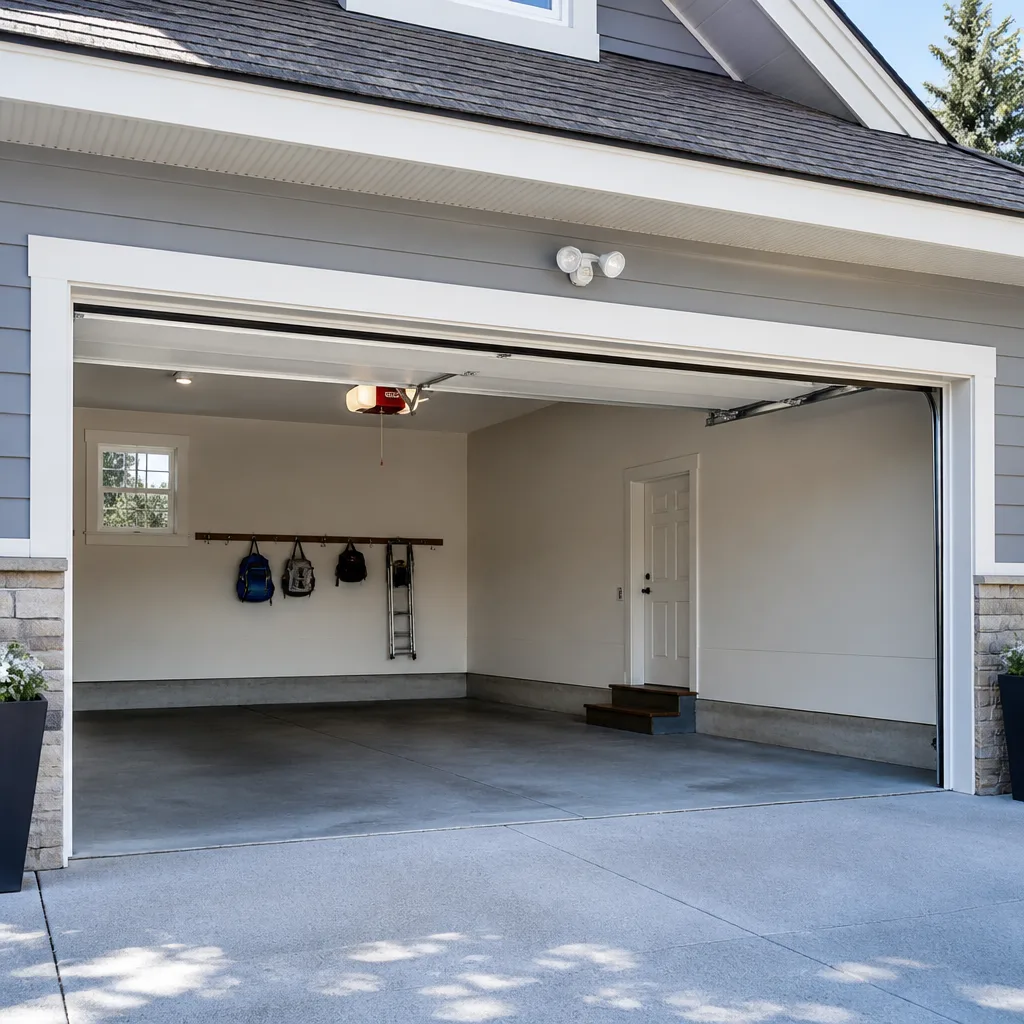 LiftMaster openers
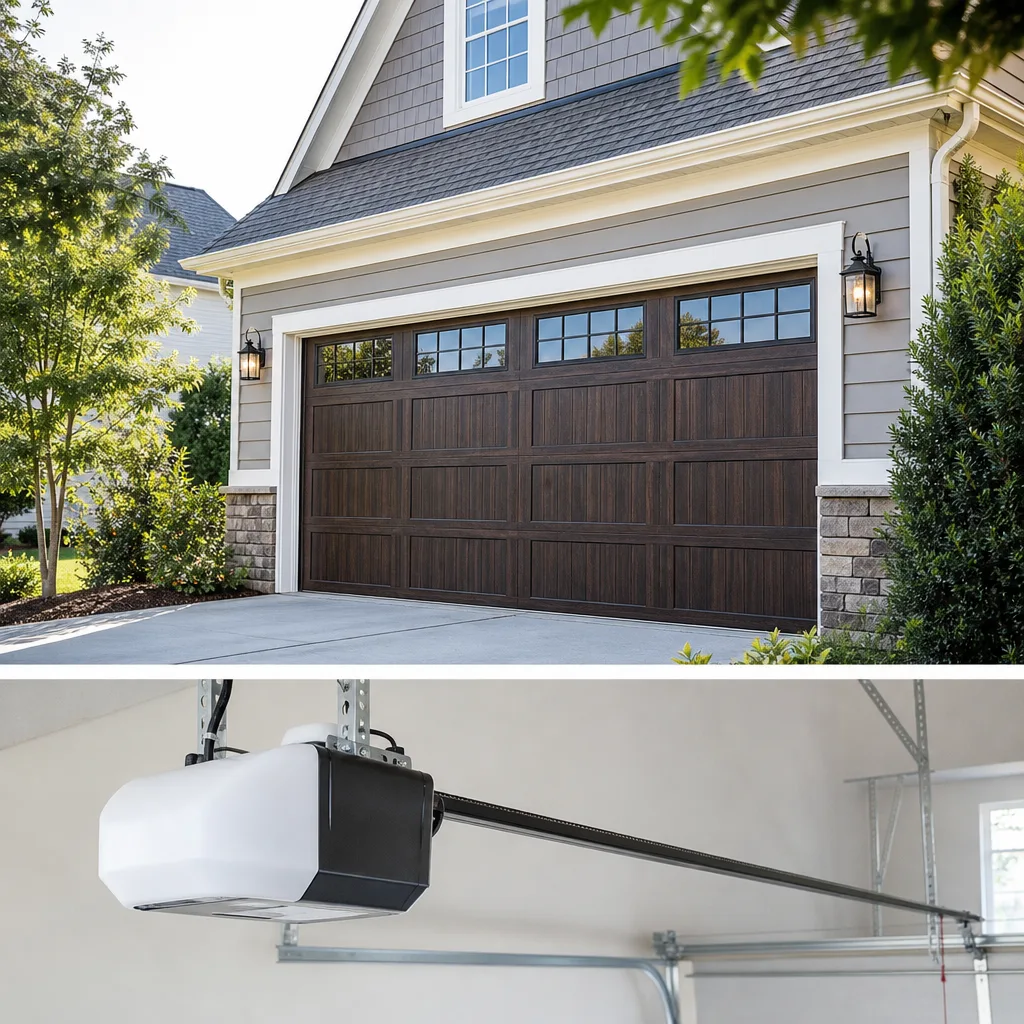 Chamberlain openers
Full 25-point door and opener safety check with every visit - springs, cables, rollers, tracks, and your LiftMaster or Chamberlain opener included
You get a price before we start. It does not change when the truck arrives.
Get your free estimateGarage Door Warning Signs: A Las Vegas Homeowner’s Reference Guide
Most homeowners in Las Vegas don’t think about their garage door until it refuses to move. But the mechanical failures that strand a car in a Summerlin driveway at 7 a.m. almost never happen without warning. The door gives off signals for weeks beforehand: a half-second hesitation before reversing, a faint rasp near the spring, a cable that’s quietly unraveling. Learn to read those signals in a 60-second visual check and you’ll catch a $75 adjustment before Las Vegas heat turns it into a $400 opener replacement. This guide shows you exactly what to look for, what it sounds like, and when to call someone before the door stops cooperating entirely. For The Complete Guide to Garage Door in Las Vegas, see our full resource.
Quick Answer
The most common garage door warning signs in Las Vegas are a door that hesitates or reverses for no reason, a visible gap or rust line in a torsion spring, frayed cable strands near the bottom bracket or cable drum, a motor that sounds labored in afternoon heat, and a door that wobbles or leaves uneven gaps at the weatherstrip. Any one of these is worth a professional inspection. Most fixes cost under $200 when caught early, and far more than that when ignored for a season.
If your door is making a new noise, moving differently, or hesitating when it didn’t before, call Bramwell Garage Doors Las Vegas at (725) 210-0201 for a free estimate. A technician will arrive within a stated window, put a written price in your hand before any work starts, and leave the job site clean. No door-step price changes, no guesswork, and the guarantee is in writing.
Styles & brands we work with
Table of Contents
- Torsion Springs: Worn vs. Broken, and What Each Look Like
- Cable Fraying: Where to Look and What It Looks Like
- Opener Warning Signs That Are Heat-Specific to Las Vegas
- Track Alignment: Wobbles, Squeaks, and Uneven Gaps
- How to Describe a Garage Door Symptom So the Technician Brings the Right Parts
- The 60-Second Visual Check You Can Do This Weekend
- What These Repairs Typically Cost in Las Vegas
- When to Call a Professional
Torsion Springs: Worn vs. Broken, and What Each Looks Like
A torsion spring is the heavy coil mounted horizontally above the inside of your garage door. It stores the mechanical energy that lifts most of the door’s weight. Every time the door cycles open and closed, that spring winds and unwinds. Most residential torsion springs in the Las Vegas market are rated for 10,000 to 15,000 cycles. A household that opens the door four times a day reaches 10,000 cycles in roughly seven years. Heat accelerates metal fatigue, so springs in Henderson and North Las Vegas tend to fail on the earlier side of that range.
A worn spring has not snapped yet. It’s giving you time. Here’s what we see on doors in the Las Vegas valley when a spring is within months of failure:
- Visible gap in the coil. A healthy torsion spring has tight, consistent coils touching each other. A worn spring often shows a small gap – a third of an inch or more – between two coils near the center. That gap means the metal has stretched and lost tension.
- Rust or surface pitting. Las Vegas humidity is low, but garage interiors still trap heat. A spring that’s seven or eight years old will often show a fine rust bloom or pitted surface. Rust concentrates stress points and accelerates cracking.
- The door feels heavier. As a spring loses tension, the door’s apparent weight increases. If the door is noticeably harder to lift manually – by your hand, not the opener – when you pull the red emergency release, the spring is fatigued.
- The opener strains at the start of the cycle. Listen for the motor’s pitch at the moment the door first starts moving. A labored, lower-pitched growl that wasn’t there a year ago often means the spring is no longer doing its share of the lifting.
A broken torsion spring, by contrast, announces itself. The sound is a loud bang, like a firearm or a heavy board slapping concrete. The door will not lift. Attempting to open it with the opener, even once, can burn out the motor or strip the gears inside the opener head because the motor is trying to dead-lift a 150 to 250 pound door without spring assistance. If your spring breaks, release the emergency cord and leave the door closed. Do not try to lift it by hand. A broken spring is under no compression, but the door itself is heavy enough to cause serious injury if it drops or shifts unexpectedly.
Replacing a torsion spring is not a do-it-yourself job, and we say that as clearly as we know how. The winding and unwinding process involves high-tension steel under enormous stored force. If the winding bar slips, the spring releases that force instantly. The injuries are severe, and they happen every year in the Las Vegas metro. A trained professional carries the correct winding bars, matches the spring’s wire size and inside diameter to the door’s actual weight, and performs the replacement without exposing anyone to that stored energy. If you see a gap in the coil or hear that bang, call a professional. Most garage door spring replacements in Las Vegas cost between $180 and $340 for a pair of springs, parts and labor included, and an experienced technician can complete the job in under two hours.
What a failing spring sounds like
In our experience, homeowners usually hear a spring problem before they see it. A worn torsion spring often produces a rhythmic creaking or ticking as the door moves, especially near the top of its travel. It’s not the high-pitched squeal of a bracket – that’s a hinge or roller. It’s deeper, and it pulses in time with the door’s movement. A broken spring makes one loud, sharp crack and then silence. After the crack, the opener motor sounds different: higher-pitched, spinning faster, and no longer connected to meaningful resistance. If you hear any of these and you’re in the Las Vegas area, call (725) 210-0201 before the spring fails completely. A no-pressure inspection costs nothing, and the written estimate tells you exactly what the repair will cost before you commit.
Cable Fraying: Where to Look and What It Looks Like
The lift cables are the two steel cables that run vertically along each side of the door, from the bottom corner brackets up to the cable drums mounted on the torsion spring shaft above the door. They transfer the spring’s lifting force to the bottom of the door. A garage door cable in Las Vegas lives under constant tension. Over time, individual steel wires inside the cable begin to break. That’s fraying.
Here’s where to look:
- The cable drum. This is the spool at the top of the shaft, above the door on the inside. Look for small steel “whiskers” – broken wire strands poking out from where the cable wraps onto the drum. Those whiskers are the first visible sign of cable fatigue.
- The bottom bracket. Crawl under the door (when it’s open and blocked in place) and inspect where the cable attaches to the bottom corner. Early fraying looks like one or two separated strands. A cable that’s days from snapping will show a visible birdcage effect – broken strands bulging outward along several inches of the cable’s length.
- The cable length. With the door open, run your eye along the full cable. Look for flat spots, kinks, or areas where the cable’s weave pattern looks uneven. Those are stress points.
A frayed cable is a do-not-ignore item. The cable is the only thing preventing the door from dropping if the spring breaks or if the other cable fails. When a cable snaps in Las Vegas, the door usually crashes down on one side first, torquing the entire assembly. The noise is violent, the damage to tracks and panels is often severe, and if anyone is under the door at the time, the risk of injury is real. We’ve been called to Henderson and southwest Las Vegas homes where a snapped cable tore the bottom bracket clean off the door panel. What would have been a $120 cable replacement turned into a full panel replacement and track realignment. The cable was showing visible fraying for weeks before it failed.
Safety note: A garage door cable is under high tension from the moment the spring is wound. Do not attempt to remove or replace a cable yourself. The release of that tension can cause the cable to whip and cut. A trained professional uses clamps and winding bars to contain the tension before touching a cable. We say this not to alarm you but to be clear about the risk. If you see a birdcage, whiskers, or a kink in a cable, call a professional. Most cable replacements in the Las Vegas market run $110 to $190, including parts and labor. It’s a small number compared to the alternative.
Opener Warning Signs That Are Heat-Specific to Las Vegas
Las Vegas summers test electric garage door openers in ways that most of the country never experiences. A garage interior in July can reach 130 to 145 degrees Fahrenheit by mid-afternoon. The opener’s motor, capacitor, and logic board all sit in that heat, and they degrade faster because of it. Here are the heat-specific warning signs we see in Las Vegas that homeowners in other climates rarely encounter. For seasonal garage door care tips, check our year-round guide.
Motor laboring in afternoon heat
In the hottest part of a summer day – typically between 2 p.m. and 6 p.m. – an opener motor under heat stress sounds labored. The pitch drops, the cycle takes longer, and the motor may even stall mid-travel and reverse. That happens because heat increases electrical resistance in the motor windings, reducing the torque the motor can produce. A door that opens fine at 8 a.m. and slowly at 4 p.m. is telling you the motor is running hotter than it should. It might be a simple fix, like a capacitor that’s lost its ability to give the motor a starting surge. Or it could be the motor itself approaching its end of life. Either way, the heat is exposing it.
Logic board glitches from thermal cycling
A garage door opener’s logic board is the small circuit board inside the opener head that controls the buttons, sensors, and travel limits. In Las Vegas, that board experiences a daily temperature swing of 30 to 50 degrees inside the garage. Those cycles cause microscopic fractures in solder joints over years. The result is intermittent behavior that makes no sense at first: the door opens when you press the button twice but not once, the wall button works but the remote doesn’t, the opener forgets its travel limits and slams the door against the floor. Intermittent, non-repeatable behavior is the classic signature of a heat-cycled logic board. It often gets misdiagnosed as a remote battery problem or a sensor alignment issue. We ask Las Vegas homeowners one question when these symptoms appear: does it happen more often in the afternoon? If the answer is yes, the board is a leading suspect.
What thermal failure sounds like
Thermal stress has a signature sound. Listen for a soft clicking from the opener head when you press the button and nothing moves. That’s the board telling the motor to run but the circuit not completing. You might also hear a buzz – the motor trying to start but unable to spin. Neither sound means the opener is definitely dead. Both mean it’s overdue for a professional look. A capacitor replacement in Las Vegas runs about $85 to $140 including the service call. A new opener with installation runs $400 to $600 for a quality chain or belt drive unit. The capacitor is the cheap fix. The opener is the expensive one. The difference between them is a diagnostic call, and a good technician can tell you which one it is in ten minutes.
Bramwell Garage Doors Las Vegas services openers from every major brand: LiftMaster, Chamberlain, Genie, Craftsman, and Raynor. We carry capacitors and logic boards for the most common models on our trucks, so in many cases the repair happens on the first trip. If your opener is glitching in the afternoons, call (725) 210-0201 and describe the symptom. We’ll tell you whether it’s worth sending a technician or whether the door needs a different fix entirely.
Track Alignment: Wobbles, Squeaks, and Uneven Gaps
The garage door tracks are the two vertical channels on either side of the door, plus the curved horizontal sections that guide the door back into the garage. They’re attached to the wall and ceiling with brackets and lag bolts. When everything is aligned, the door travels the full height without any sideways movement, and the rollers glide along the track with a steady, even sound. When something is off, the door tells you.
A sideways wobble is the most common early sign. Stand inside the garage and watch the door move from the ground up. If the door shifts left or right by even a quarter inch as it travels, a track is out of alignment or a bracket has loosened. The door is supposed to be rigid. Any visible lateral movement means something is pulling it sideways.
A squeak on one side only is another clue. A symmetric squeak from both sides usually means dry rollers – a lubrication issue. A squeak or scrape from only the left or only the right side suggests that side’s track or roller is carrying more load than it should, usually because the door is slightly crooked on the track. The most common cause in Las Vegas is thermal expansion of the door’s metal panels in summer heat, which changes the door’s dimensional profile enough to shift the load distribution. Another common cause is a lag bolt that’s worked loose from the wall as the house settles – something we see often in newer subdivisions in the southwest valley where the soil is still compacting.
An uneven gap at the weatherstrip is the signal most people notice. Close the door and look at the gap between the door’s bottom edge and the floor. If the gap is wider on one side – say, half an inch on the left and a sliver on the right – the door is not closing square. That can mean a track alignment issue, a worn spring on one side causing uneven lift, or a cable that’s begun to fray and lengthen on one side. In Las Vegas, an uneven gap at the bottom seal also means a direct path for summer heat and dust into the garage. It’s worth fixing for that reason alone.
Distinguishing a simple adjustment from a structural problem isn’t hard once you know what to look for. A simple adjustment is a track that’s shifted within its bracket, or a bracket that’s loose but the wall attachment is solid. A technician fixes that with a level and a socket wrench in under 30 minutes. A structural problem is a wall anchor that’s pulled out, a section of track that’s bent from an impact, or a door itself that’s warped. Those fixes require more than an adjustment. The best way to know is to have a professional look at it. Most track alignment corrections in Las Vegas run $95 to $170, depending on what’s actually out of place. That quote is written down before any work starts, not after.
How to Describe a Garage Door Symptom So the Technician Brings the Right Parts
A good service call starts with a good description. The more precisely you can tell the technician what the door is doing, the more likely the tech arrives with the correct spring, board, cable, or roller already on the truck. That saves you a second service call and a second service fee. Here’s the method, in order:
- Say when it started. “Started about three weeks ago” or “First noticed it last summer, worse now” gives the technician a progression timeline. It tells us whether we’re looking at a sudden mechanical break or a slow wear pattern.
- Describe the sound, not your diagnosis. Don’t say “I think the spring is bad.” Say “There’s a deep creak near the top of the door when it opens, and it pulses with the movement.” The technician interprets the sound. Your job is to report it accurately.
- Say what makes it worse or better. “Happens more in the afternoon,” “Worse when it’s hot out,” “Only happens when opening, not closing,” “Goes away after the door has cycled once.” These conditional details are diagnostic gold. Heat-dependent symptoms in Las Vegas point to specific components.
- Report any visual changes. “I see a gap in the coil above the door,” “The cable is peeling near the bottom bracket,” “The door is crooked when it’s closed.” Take a photo with your phone if you can. A clear photo of a frayed cable or coil gap helps the technician decide what to bring.
- Mention the door brand and approximate age. “It’s a Clopay door, maybe eight years old, opener is a Genie.” That tells the technician what hardware to expect and what parts are likely to be the right match.
- Say what the door is doing, not just what it’s not doing. “It opens fine but reverses halfway down” is far more useful than “It’s not working right.” The specific behavior narrows the diagnosis from forty possible causes to three or four.
When you call garage door repair in Las Vegas, the person who answers the phone at Bramwell is a live human being, 24 hours a day. Ask for a clear arrival window, and expect the technician to arrive within it. A reputable company in this market will give you a written price before any work starts. If anyone refuses to put the price in writing before touching the door, that’s a signal to call someone else. The number to call is (725) 210-0201.
The 60-Second Visual Check You Can Do This Weekend
You don’t need tools or technical knowledge to catch most of the warning signs in this guide. You need 60 seconds, two working eyes, and a door that’s closed and disconnected from the opener. Here’s the sequence, in order:
- Stand inside the garage, door closed, and look at the torsion spring above the door. Are the coils tight together? Any gaps? Any rust? If you see a gap of a third of an inch or more between coils, the spring is wearing. Note it.
- Look at the two cables on either side of the door. Trace each cable from the bottom corner to the drum at the top. Any whiskers, birdcages, flat spots, or kinks? Any of those means a cable replacement is in your near future. Note it.
- Look at the bottom of the door. Is the gap between the door and the floor even from one side to the other? If one side is clearly wider, the door is not closing square. Note it.
- Look at the tracks. Are both vertical tracks straight up and down, or is one bent or leaning? Are all the brackets still tight to the wall? A track that’s obviously out of plumb is a mechanical problem waiting to become a bigger one. Note it.
- Press the opener button and listen as the door completes one full cycle. Any new sounds – growling, clicking, scraping, or banging – that weren’t there a month ago are worth investigating. Note them.
That’s the entire check. Run it once a month, or at minimum once at the start of summer and once at the start of winter. Las Vegas temperature swings stress a garage door in both seasons, and a door that passes in March can show strain by August. If you find anything on the list, call for a professional inspection. The inspection is free, the price is in writing, and you get an honest answer about whether the issue is urgent or can wait.
What These Repairs Typically Cost in Las Vegas
Knowing what a repair costs before you call protects you from both underpaying for shoddy work and overpaying for routine service. Here are the current market-rate ranges for the repairs discussed in this guide, based on what we see across the Las Vegas valley in 2024:
- Torsion spring replacement (pair): $180 to $340, parts and labor included. The range reflects differences in spring wire size, cycle rating, and whether the replacement includes a center bearing or cable inspection.
- Cable replacement (single): $110 to $190. A pair replacement typically runs $180 to $280, and it’s often done together because cables wear at close to the same rate.
- Opener capacitor replacement: $85 to $140 including the service call and part.
- New opener with installation: $400 to $600 for a belt or chain drive from a major brand, including the unit, labor, safety sensor alignment, and programming.
- Track alignment or bracket tightening: $95 to $170, depending on the number of brackets that need adjustment and whether the door requires re-leveling.
- Limit switch adjustment: $65 to $110. This is the fix for the half-second hesitation and reversal described at the top of this guide. A drifting limit switch is one of the cheapest problems to correct – and one of the most common in Las Vegas garages – but it’s often ignored because the door “still works.”
These are real market rates for the Las Vegas metro. Your specific door may fall above or below the range depending on its weight, age, and brand. Amarr and Wayne Dalton doors, for example, use different spring and hardware specifications than other brands, and those differences show up in the parts cost. A reputable company will explain exactly where your quote falls in the range and why. At Bramwell Garage Doors Las Vegas, the price you’re quoted is the price you pay. It’s written down before any work begins, and it doesn’t change when the technician “sees the door.” That’s the Kingswell Guarantee, and it’s in writing on every job. The 365-Day Done Right Promise sits behind it: if a covered repair fails within a year, we come back and fix it at no charge. No invoice adjustments, no door-step surprises. The number on the estimate matches the number on the invoice, every time.
See the difference
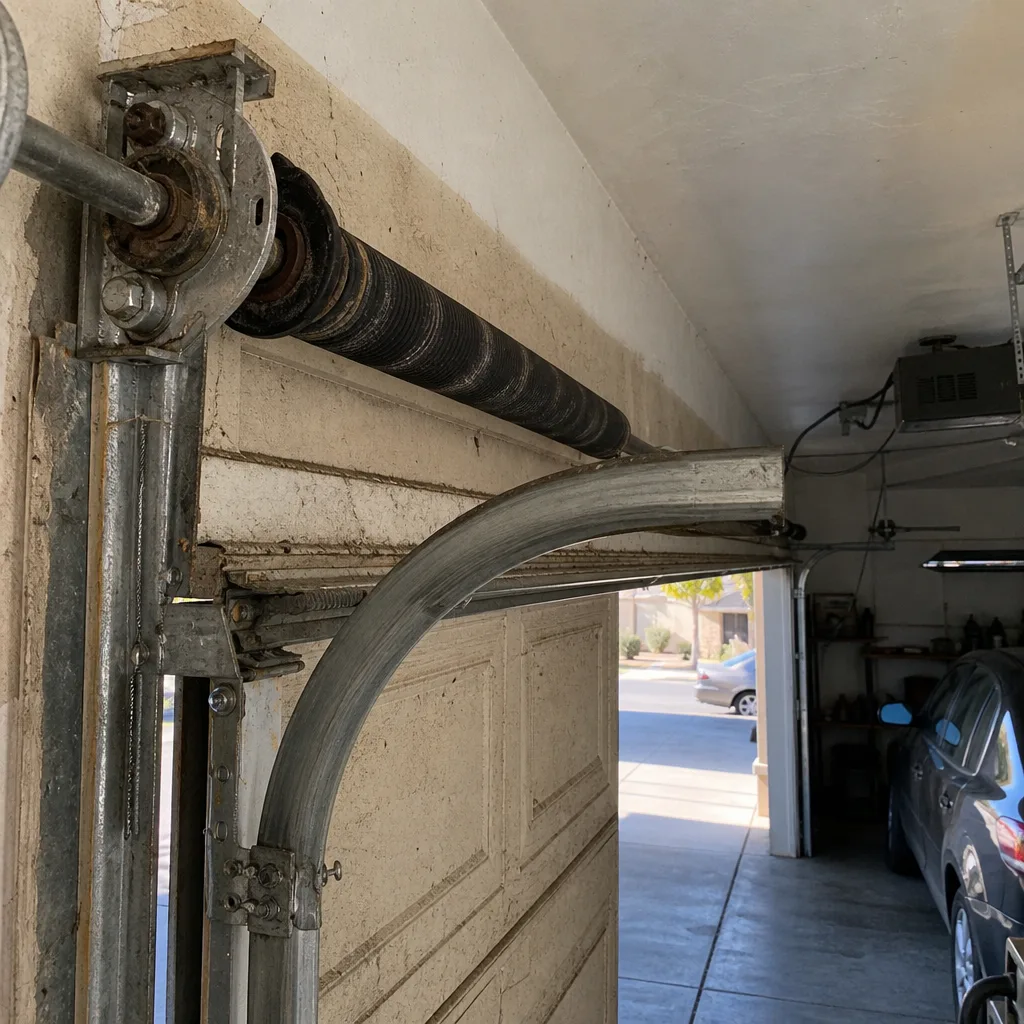 Before
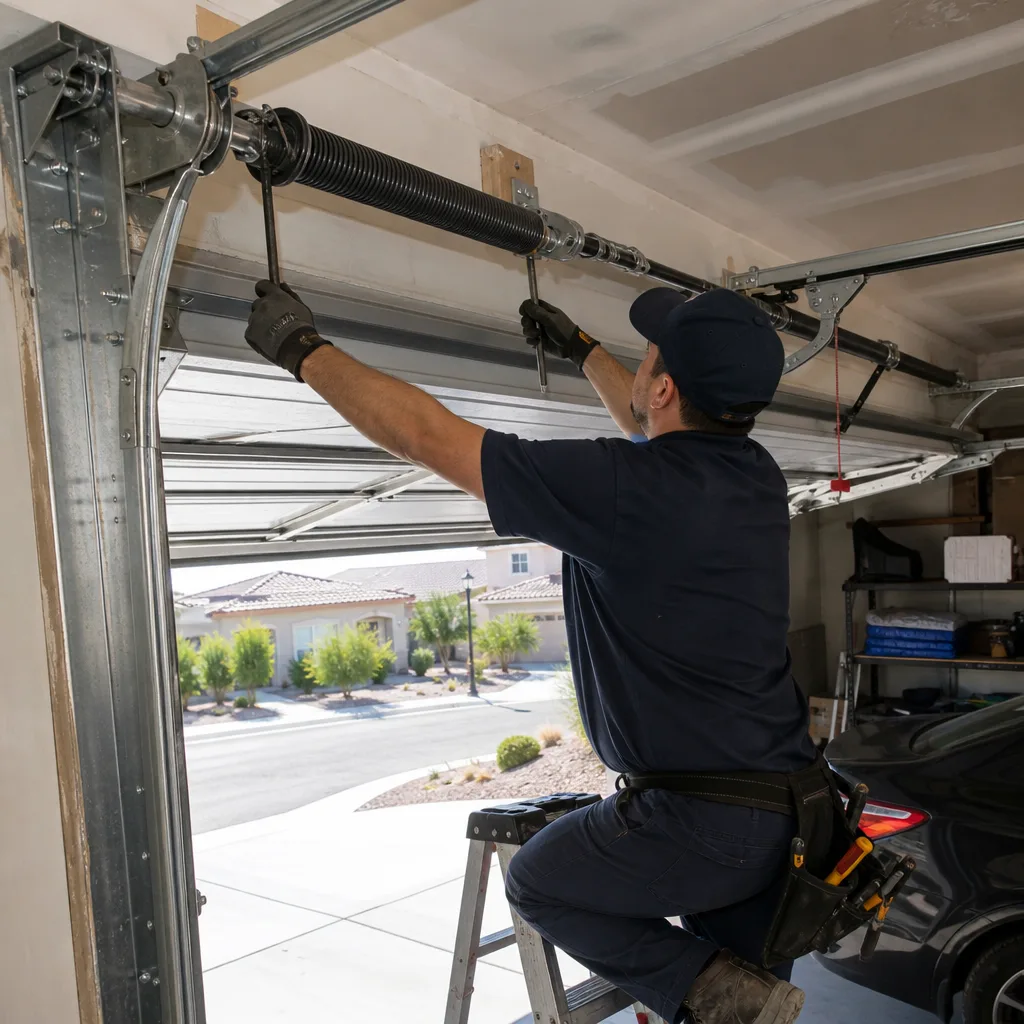 After
After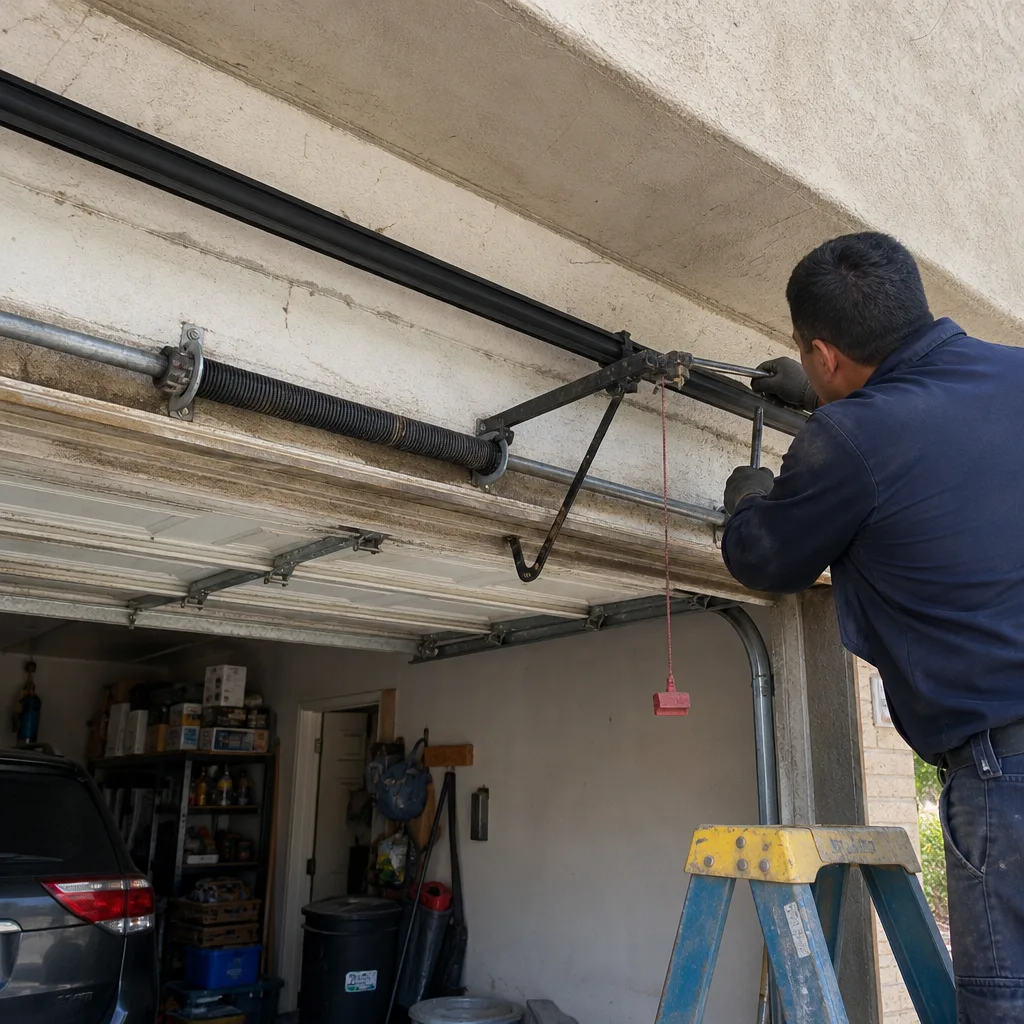 Before
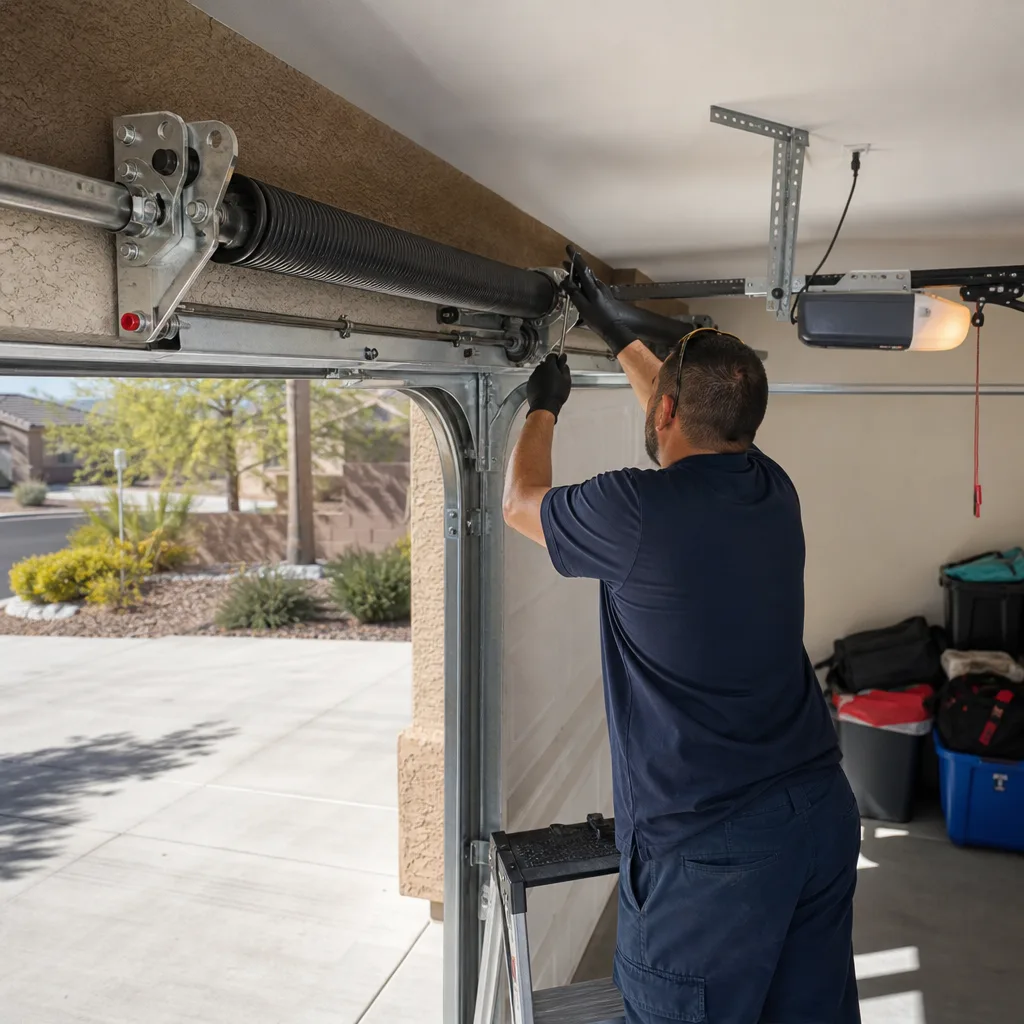 After
After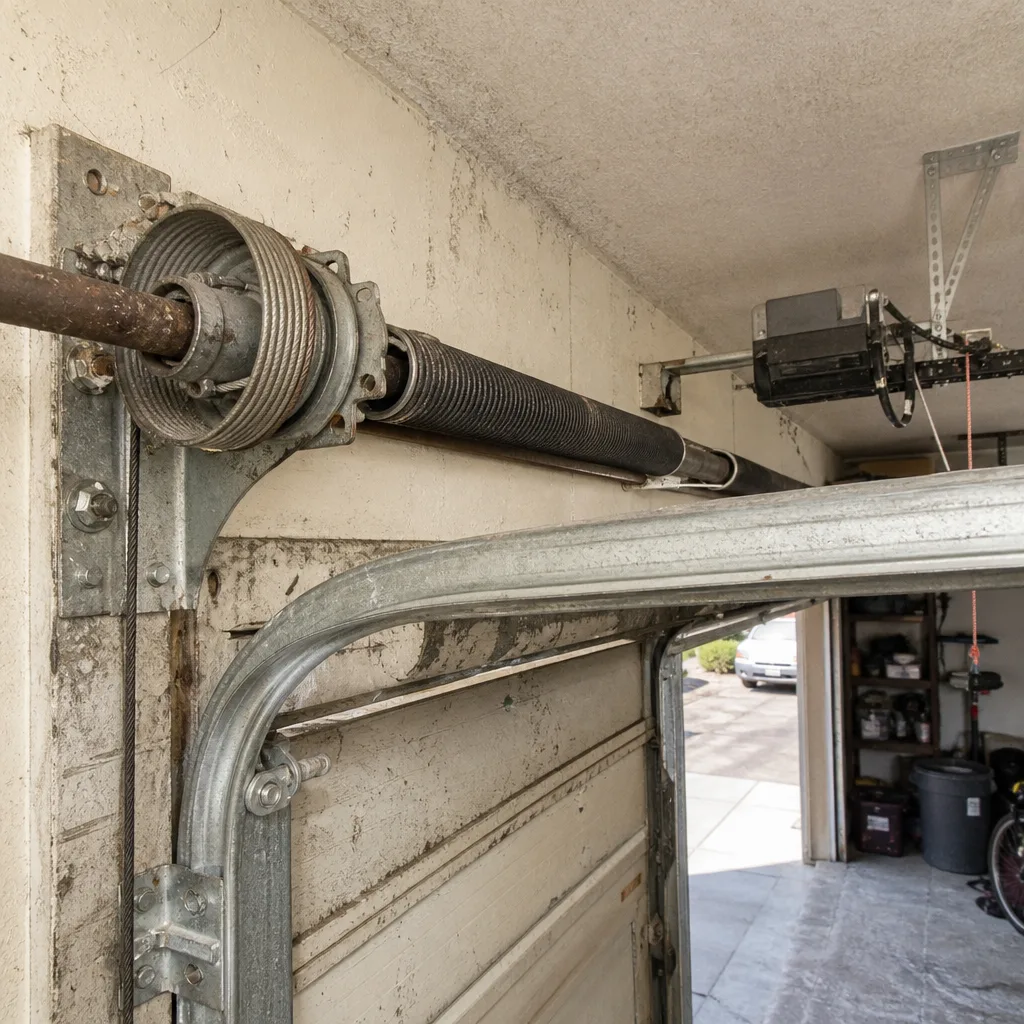 Before
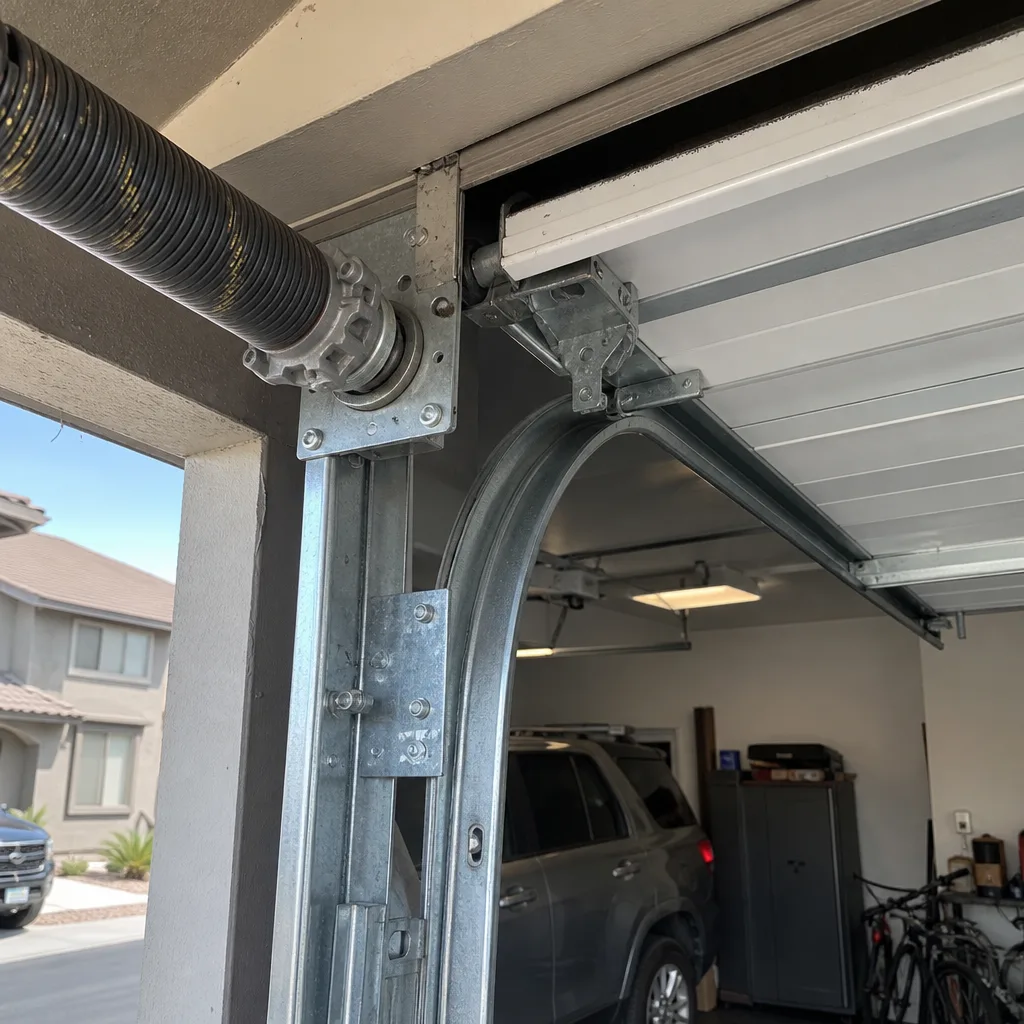 After
AfterCommon Mistakes to Avoid
- Ignoring a half-second hesitation. That hesitation is your limit switch drifting. It’s a $65 to $110 fix today. Let it drift for another month in Las Vegas summer heat and it can become a $400 opener replacement when the motor rams the door against the floor and strips the internal gears.
- Adding grease to a noisy spring. Greasing a torsion spring does nothing to fix fatigue. It just makes the spring slippery while it continues to lose tension. If the spring is creaking, the spring is telling you it’s worn. Listen to it.
- Lifting a door manually after a spring breaks. We’ll say it again: a garage door without spring assistance weighs 150 to 250 pounds. It can drop faster than you can react. Leave the door alone and call a professional.
- Spraying WD-40 on the tracks. Tracks are guides, not gears. Lubricant on the track surface attracts Las Vegas dust and turns it into a grinding paste against the rollers. Lubricate the rollers, hinges, and bearings only, and use a silicone or lithium-based product.
- Continuing to use an opener that’s laboring in the heat. The motor is telling you it can’t produce enough torque. Every hot-afternoon cycle shortens its life. Get it diagnosed before the capacitor or motor fails completely, usually at the worst possible time.
- Buying parts online and attempting a spring or cable repair. High-tension components are genuinely dangerous. The savings are not worth the risk. A professional carries the correct tools and matching parts, and the repair is covered by a written guarantee.
- Assuming the door is fine because it still opens. The most expensive garage door failures we see in Las Vegas are the ones that were visibly, audibly failing for months before the homeowner called. “It still opens” is not the same as “it’s safe and functioning properly.”
When to Call a Professional
Call a professional the moment you see a gap in the torsion spring coil, a birdcage in a cable, or a door that’s clearly not closing square. Call the same day if the opener is laboring in afternoon heat or glitching intermittently. These are not “keep an eye on it” situations. They’re mechanical failures in progress, and in Las Vegas they progress quickly. A frayed cable holds until it doesn’t. A fatigued spring carries tension until it snaps. The cost of a service call is a fraction of the cost of the damage a failure causes.
Bramwell Garage Door Repair offers free estimates throughout the Las Vegas valley. A background-checked, uniformed technician arrives within a stated window, assesses the door, and puts a written price in your hand before any work begins. You get a straight answer about what’s urgent and what can wait. The price covers the work, the part, and the labor. The guarantee is in writing, and if the repair fails within a year, we come back and fix it at no charge. Call (725) 210-0201 to schedule a free estimate. A live person answers, 24 hours a day.
Frequently Asked Questions
A spring that’s about to break usually shows a visible gap between coils near the center, surface rust, and a door that feels heavier than it did a year ago. You may also hear a rhythmic creak or ticking as the door moves, especially near the top of its travel. If you see any of these signs, call (725) 210-0201 for an inspection. A spring replacement costs $180 to $340 in Las Vegas and is far cheaper and safer than dealing with a spring that snaps unexpectedly.
A cable that needs replacing shows small steel “whiskers” near the cable drum, a birdcage of broken strands along its length, or flat spots and kinks where the weave is disturbed. Look at the cable where it attaches to the bottom bracket. Any separated strands there are a sign the cable is failing. A single cable replacement runs $110 to $190 in Las Vegas. If one cable is showing wear, the other usually follows soon after, so ask the technician to check both.
Las Vegas garage interiors regularly reach 130 degrees or more in July and August. That heat increases electrical resistance in the opener’s motor windings, reducing the torque the motor can produce. The result is a door that opens slowly, labors, or stalls mid-cycle in the afternoon but works fine in the morning. The cause is usually a failing capacitor or a motor under heat stress. A capacitor replacement costs $85 to $140. A new opener costs $400 to $600. The heat is exposing a component that was already weakening.
We strongly advise against it. Torsion springs and lift cables are under high tension, and the force they release when something slips can cause severe injury. A professional uses specialized winding bars, clamps, and training to contain that energy. The cost of a professional spring or cable replacement in Las Vegas – $180 to $340 for springs, $110 to $190 for a cable – is a modest price for a repair done safely and covered by a written guarantee. We never recommend a homeowner touch these components.
Most garage door companies in Las Vegas charge a service call fee of $50 to $90, which covers the trip, the inspection, and the diagnostic time. If you proceed with the repair, that fee is typically applied toward the total. Some companies waive the diagnostic fee entirely when the repair is completed on the same visit. At Bramwell Garage Doors Las Vegas, the inspection and estimate are free, and the written price you receive is the price you pay. No changes at the door, no surprises on the invoice. Call (725) 210-0201 to schedule a visit.
Not with a company that operates under the Kingswell Guarantee. The price is written down before any work starts, and the number on the invoice matches the number on the estimate. That’s the standard. If a company cannot or will not put the price in writing before beginning work, that’s a signal to call someone else. We’ve served Las Vegas since 2001 under the same standard: say the price before the work, show up in the window, leave the place cleaner than we found it, put the guarantee in writing, and come back if it fails. That’s the way it’s supposed to work.
The Bottom Line
A garage door gives you weeks of warning before it fails. The gap in the coil. The whisker on the cable. The half-second hesitation. The labored motor in afternoon heat. None of these signals cost much to fix when they’re caught early, and all of them cost far more when they’re ignored. Run the 60-second visual check once a month. Listen for new sounds. And when something shows up, call a professional who will put the price in writing and stand behind the work. The number is (725) 210-0201. A live person answers, day or night. For more guides & resources, visit our blog.
Written by Marcus Ellery, Owner at Bramwell Garage Doors Las Vegas, serving Las Vegas since 2001.