
Last updated October 16, 2026
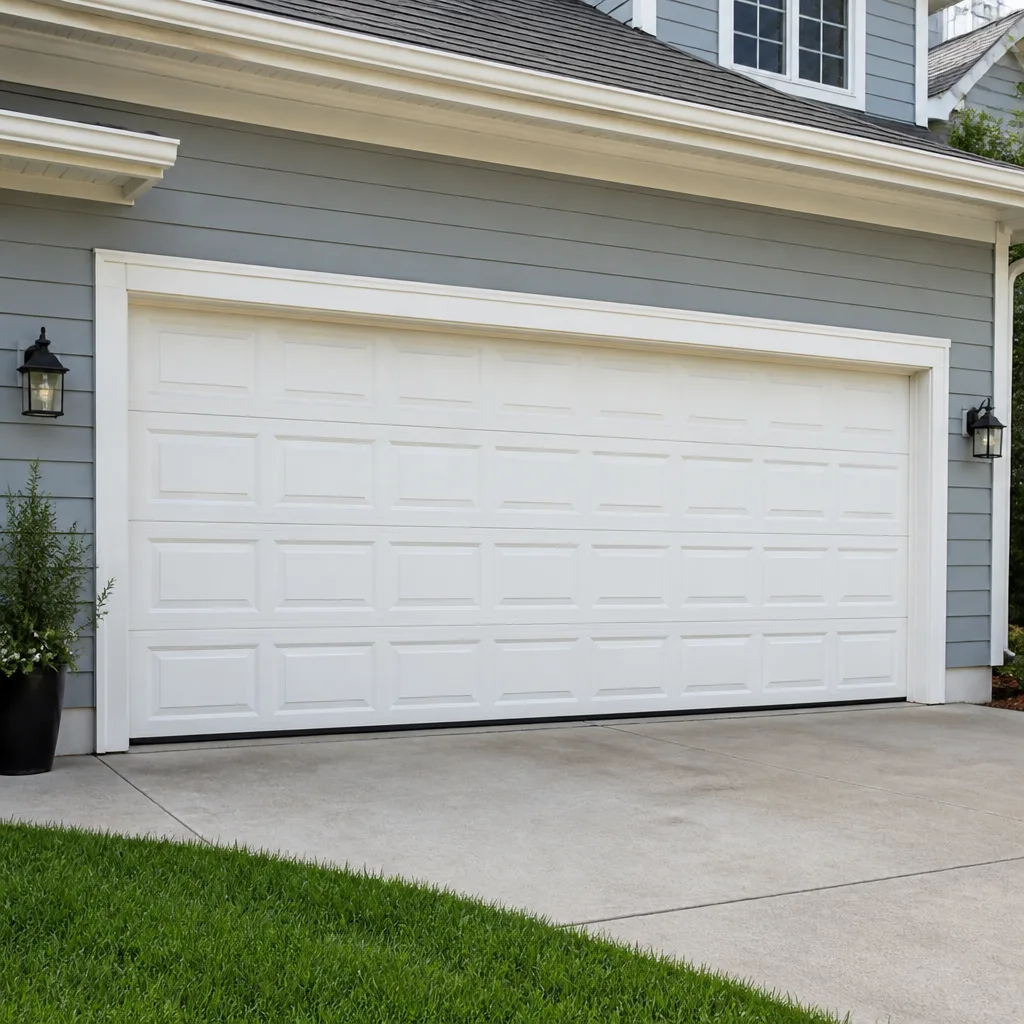 Raised-panel steel
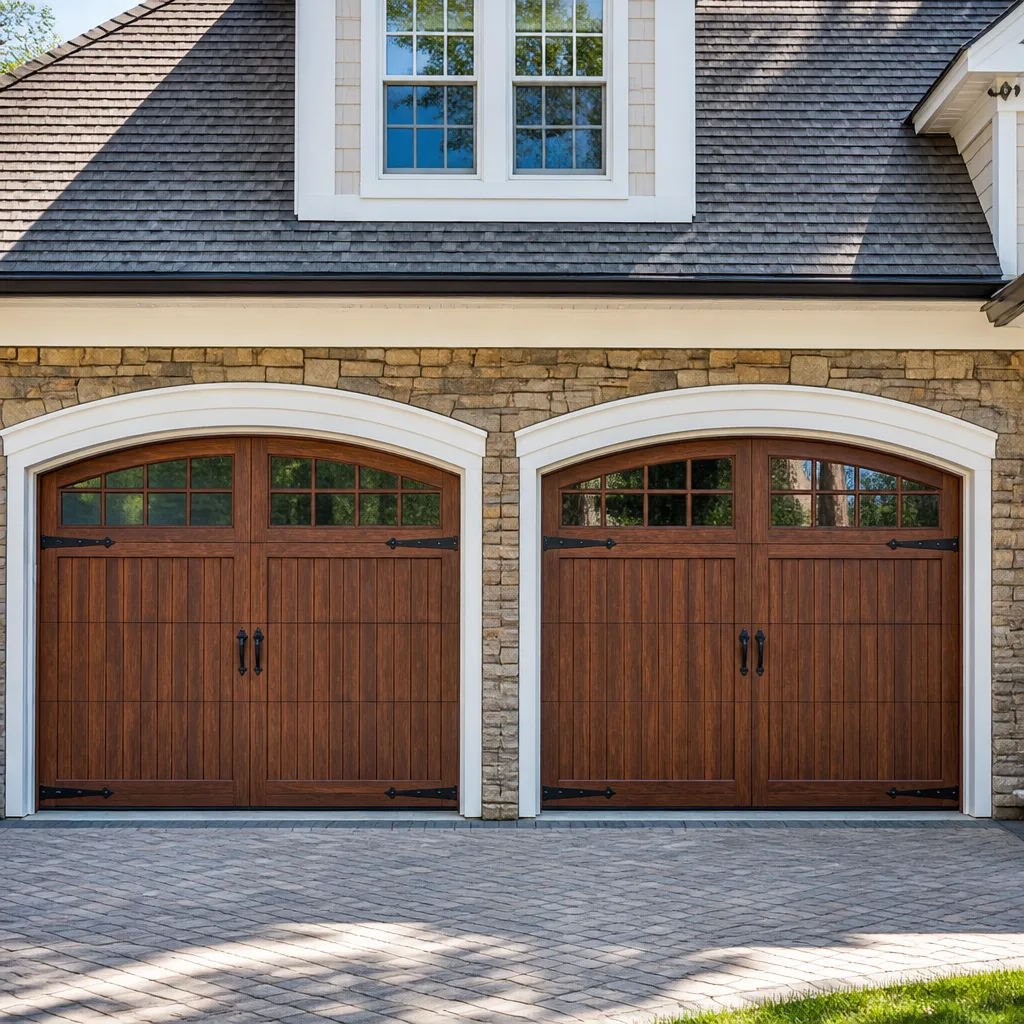 Carriage house
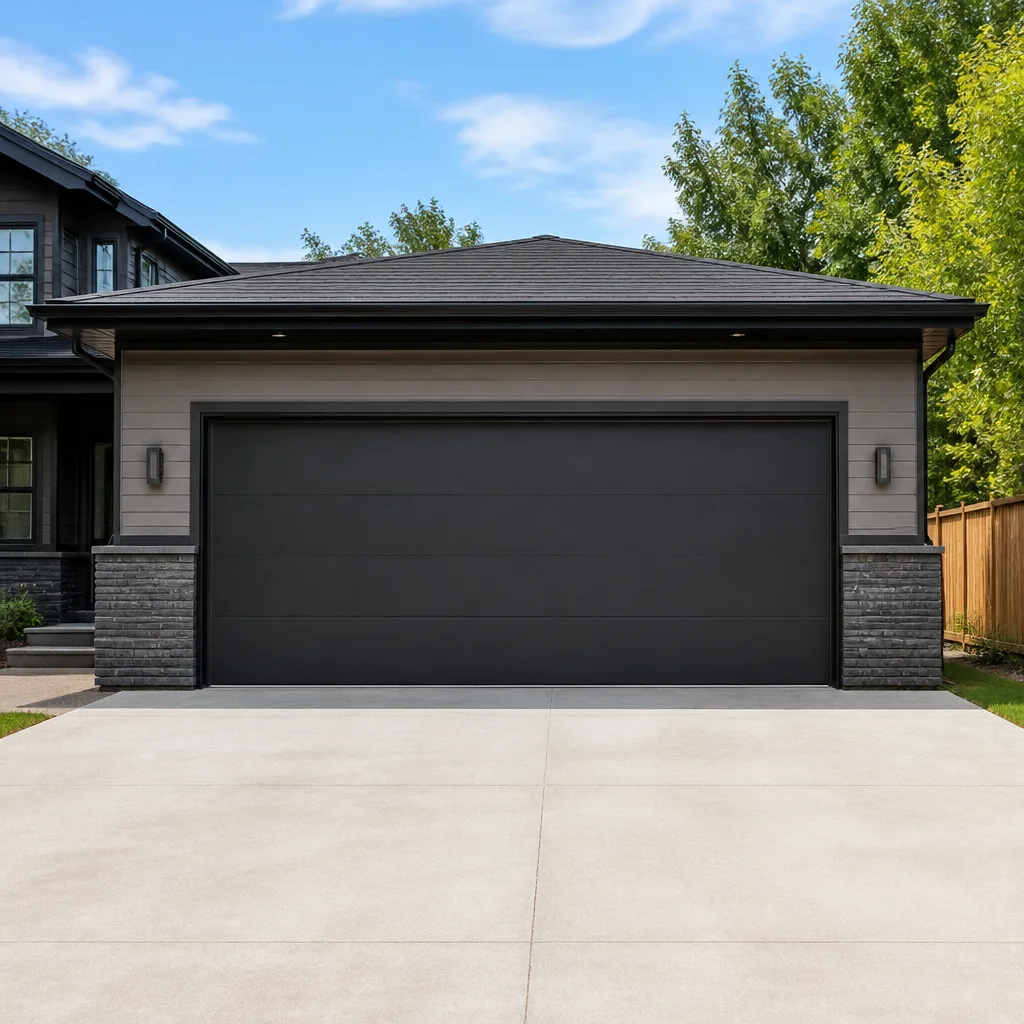 Modern flush
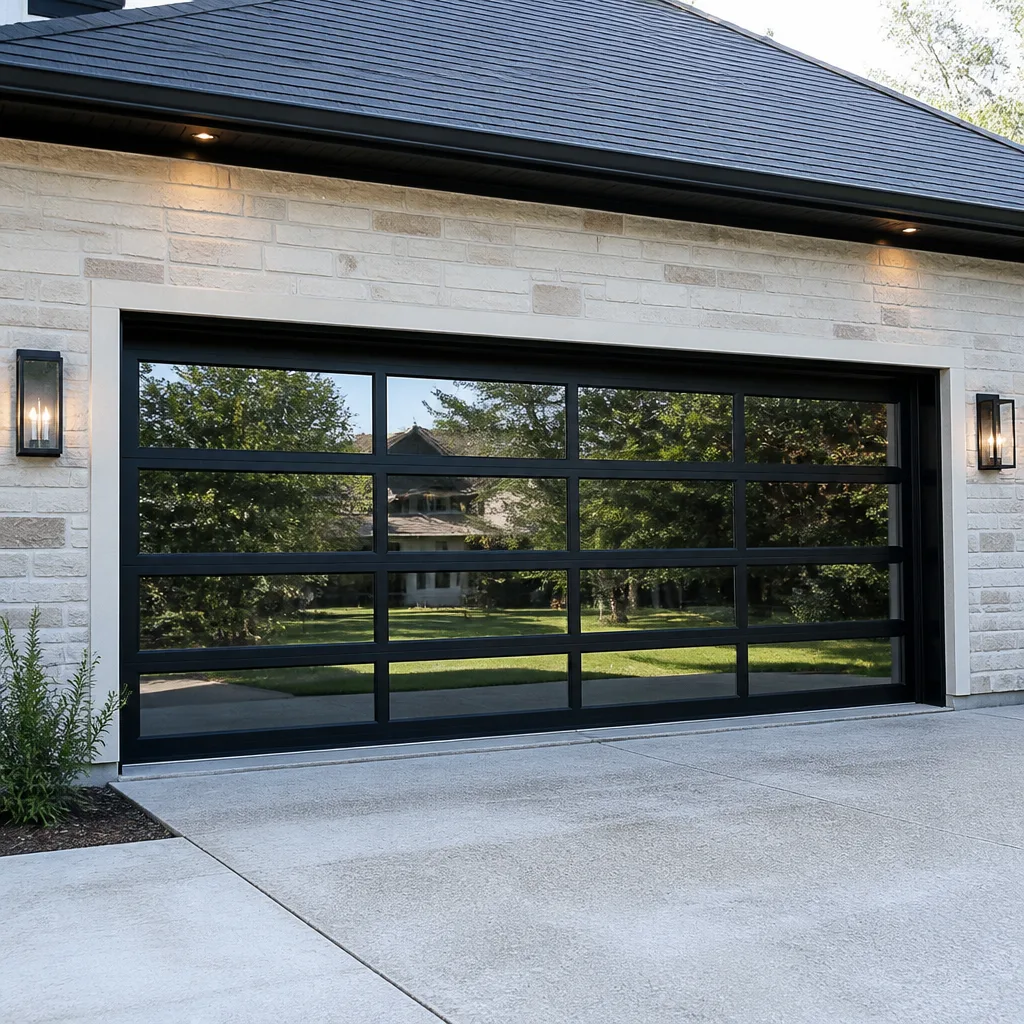 Full-view glass
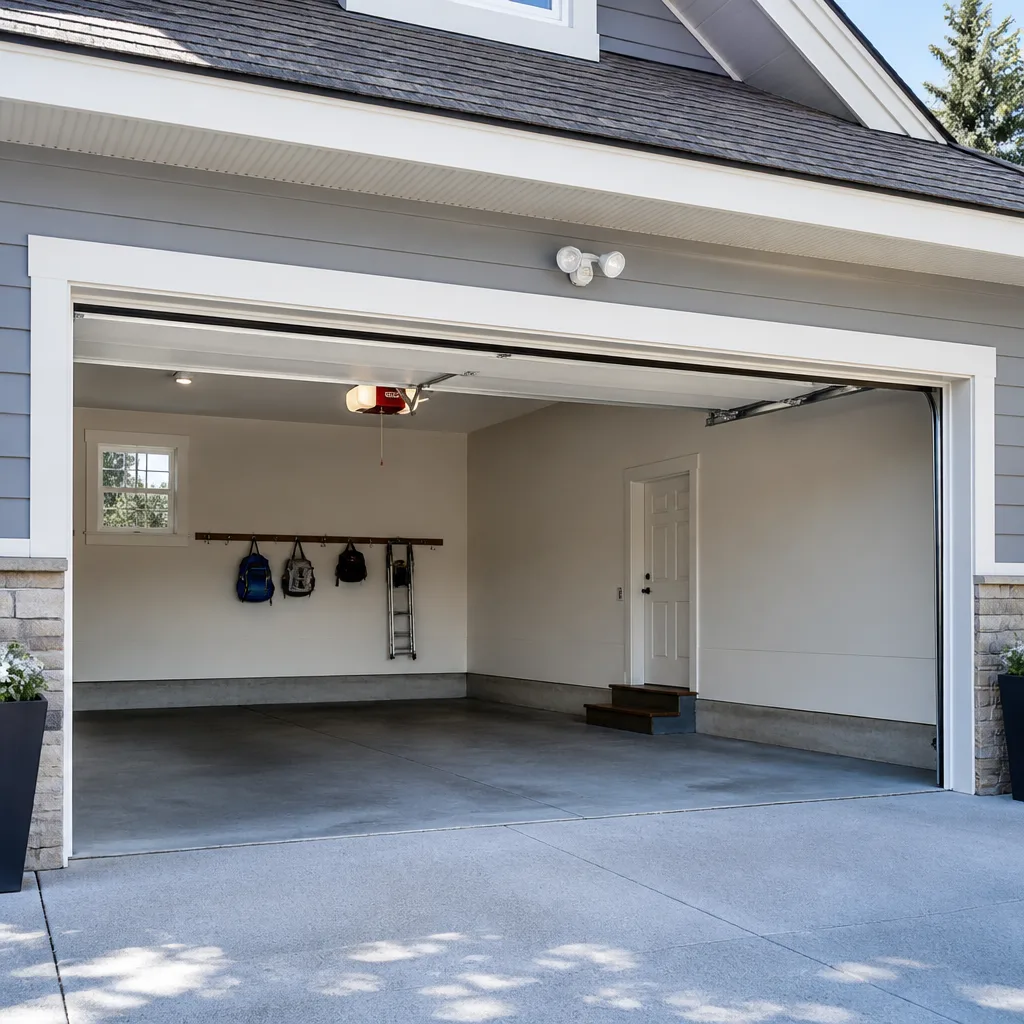 LiftMaster openers
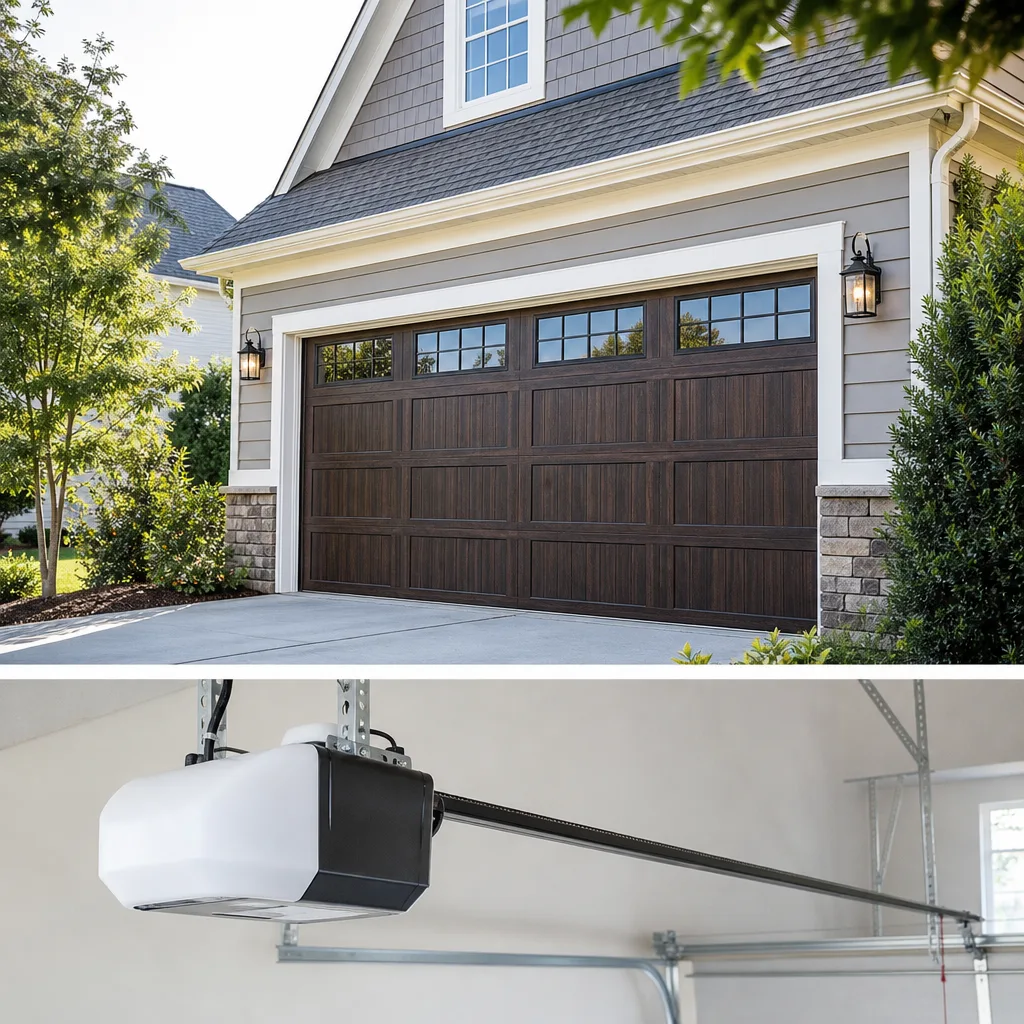 Chamberlain openers
Full 25-point door and opener safety check with every visit - springs, cables, rollers, tracks, and your LiftMaster or Chamberlain opener included
You get a price before we start. It does not change when the truck arrives.
Get your free estimateThe Complete Guide to Garage Door in Las Vegas
A steel garage door left unpainted in Las Vegas sun can reach surface temperatures above 160°F. That’s hot enough to degrade standard lubricants, warp bottom seals, and cook the grease out of torsion spring bearings in a single summer. This guide reframes every major garage door decision (material, insulation, opener type, service interval) through the lens of the Mojave environment specifically, because the advice written for Minneapolis or Seattle simply doesn’t apply here. You’ll learn what actually fails first in this climate, what to buy if you want a door that lasts, and how to avoid the service-call patterns that plague Las Vegas homeowners.
Quick Answer
The right garage door for Las Vegas is an insulated steel door (R-value 9 – 12) with a UV-stable finish, paired with a belt-drive opener, and serviced twice a year for dust and lubricant breakdown. Most repairs in Las Vegas run $150 – $340 for spring replacement, $95 – $220 for roller or hinge work, and $120 – $280 for opener repairs. See our Garage Door Cost Breakdown: The Las Vegas Homeowner’s Reference for 2026 for detailed pricing. Bramwell Garage Doors Las Vegas provides written pricing before any work starts, backed by the 365-Day Done Right Promise.
Styles & brands we work with
Table of Contents
- Why Las Vegas Climate Changes Everything
- Insulation in Las Vegas: What R-Value Actually Matters
- Steel vs. Aluminum vs. Fiberglass: UV Longevity Compared
- Torsion Springs and Desert Temperature Swings
- Alkaline Dust: The Silent Killer of Rollers and Tracks
- Choosing an Opener for a Hot Garage
- What Garage Door Work Costs in Las Vegas
- How to Buy a Garage Door Without Getting Burned
- Common Mistakes to Avoid
- When to Call a Professional
- Frequently Asked Questions
Why Las Vegas Climate Changes Everything
Garage door advice written for the national market assumes four real seasons and moderate humidity. Las Vegas has neither. We have roughly five months of triple-digit heat, single-digit humidity for stretches, and a desert soil chemistry that produces fine alkaline dust unlike anything in a humid-climate garage. These conditions change how every component wears.
The three climate factors that matter most:
- Sustained UV intensity. Las Vegas sees over 300 days of sunshine per year, with UV indexes that sit in the “very high” to “extreme” range for much of summer. Paint and powder coating fade faster here than almost anywhere else in the country.
- Surface heat, not just air heat. A south-facing or west-facing garage door in Summerlin or Henderson can hit 150 – 170°F on the panel surface. That heat transfers to hinges, springs, and opener components inside the garage.
- Alkaline dust. Mojave soil is naturally alkaline and extremely fine. It coats lubricants, mixes with them into a grinding paste, and accelerates metal-on-metal wear on rollers, hinges, and tracks.
In our experience servicing garages across Las Vegas since 2001, the two most common failure points we see in July and August are spring bearings that have burned through their grease and bottom seals that have hardened and split from repeated heat cycling. Both are entirely preventable with the right approach, which we cover below.
For more on how our team handles repairs in these conditions, see our Garage Door Repair in Las Vegas guide.
Insulation in Las Vegas: What R-Value Actually Matters
National buying guides push high R-values (R-16 and above) because most of the country is trying to keep heat in. In Las Vegas, the goal is the opposite: resisting heat transfer into the garage from a door panel that’s been baking in the sun. The insulation math works the same, but the practical recommendation lands in a different range.
Here’s the key insight: the point of diminishing returns is lower in a hot desert climate than in a cold one. R-9 to R-12 insulated steel doors perform essentially identically to R-16 and R-18 doors for Las Vegas heat management, because the dominant heat source is direct solar radiation on the panel surface, not the air temperature differential that R-value measures. What actually matters more than a bigger insulation number:
- Light-colored finishes. A white or almond door surface reflects more solar energy and runs 20 – 30°F cooler than a dark charcoal or black door. Color choice matters more than the difference between R-9 and R-16.
- Polyurethane vs. polystyrene core. Polyurethane (foam-in-place) adds structural rigidity and bonds to the steel skins, which reduces panel rattle and improves dent resistance. Worth the modest price premium.
- Thermal breaks. Better doors isolate the interior steel skin from the exterior skin so heat doesn’t conduct through the panel edge. This matters more in our heat than raw R-value.
If you park a daily driver in the garage and store paint, tools, or a freezer out there, R-9 to R-12 is the right target. If the garage is purely for parking and storage with no temperature-sensitive items, an R-6.5 insulated door is fully adequate. Non-insulated doors are a poor choice in Las Vegas: they turn the garage into an oven and transmit more noise both directions.
Steel vs. Aluminum vs. Fiberglass: UV Longevity Compared
Every door material has a different relationship with sustained UV exposure, and the tradeoffs are specific to Las Vegas conditions. Here’s what we’ve observed across thousands of doors in this market.
Steel (galvanized, factory-painted or powder-coated). The clear winner for most Las Vegas homes. Modern steel doors from manufacturers like Clopay and Amarr use polyester or polyurethane topcoats engineered for UV stability. Expect 15 – 20 years of finish life with reasonable care, and paint on steel can be refreshed if it fades. Two key things to know: dark colors fade faster than light colors (no surprise), and any scratch that exposes bare steel will rust quickly in Mojave alkaline dust. Touch up scratches promptly.
Aluminum. Aluminum doors with factory-applied finishes resist rust completely, which sounds appealing until you consider dent resistance. Aluminum is softer than steel, and Las Vegas has wind. A strong spring gust with airborne debris can leave visible dents in a full-view aluminum door. Modern aluminum doors are best for contemporary full-glass styles where the structural frame is heavy-gauge aluminum. For a standard raised-panel suburban door, steel is the better call.
Fiberglass. Fiberglass resists denting and rust, but its relationship with UV is the problem. Fiberglass gel-coat finishes oxidize and chalk under sustained Las Vegas sun faster than modern steel finishes. After 8 – 12 years, fiberglass doors in this climate often look dull and chalky, and refinishing is more involved than repainting steel. Fiberglass remains a niche choice, usually for coastal applications, and doesn’t earn its keep in the Mojave.
| Material | UV Finish Life in Las Vegas | Dent Resistance | Rust Risk | Best Use |
|---|---|---|---|---|
| Steel | 15 – 20 years | Good | Moderate (touch up scratches) | Standard raised-panel doors |
| Aluminum | 12 – 18 years | Poor | None | Full-view modern styles |
| Fiberglass | 8 – 12 years | Good | None | Rarely recommended here |
For a full breakdown of what installation involves in this market, read our Garage Door Installation in Las Vegas guide.
Torsion Springs and Desert Temperature Swings
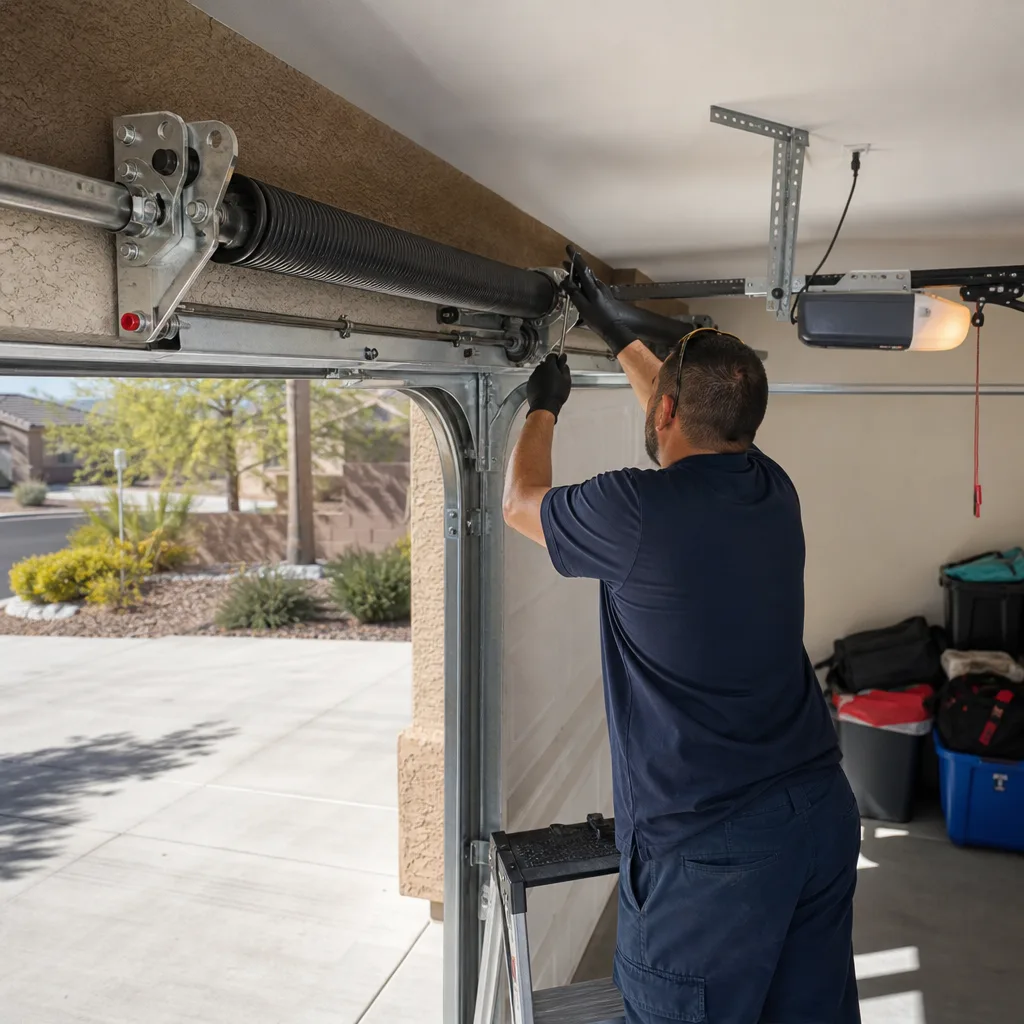
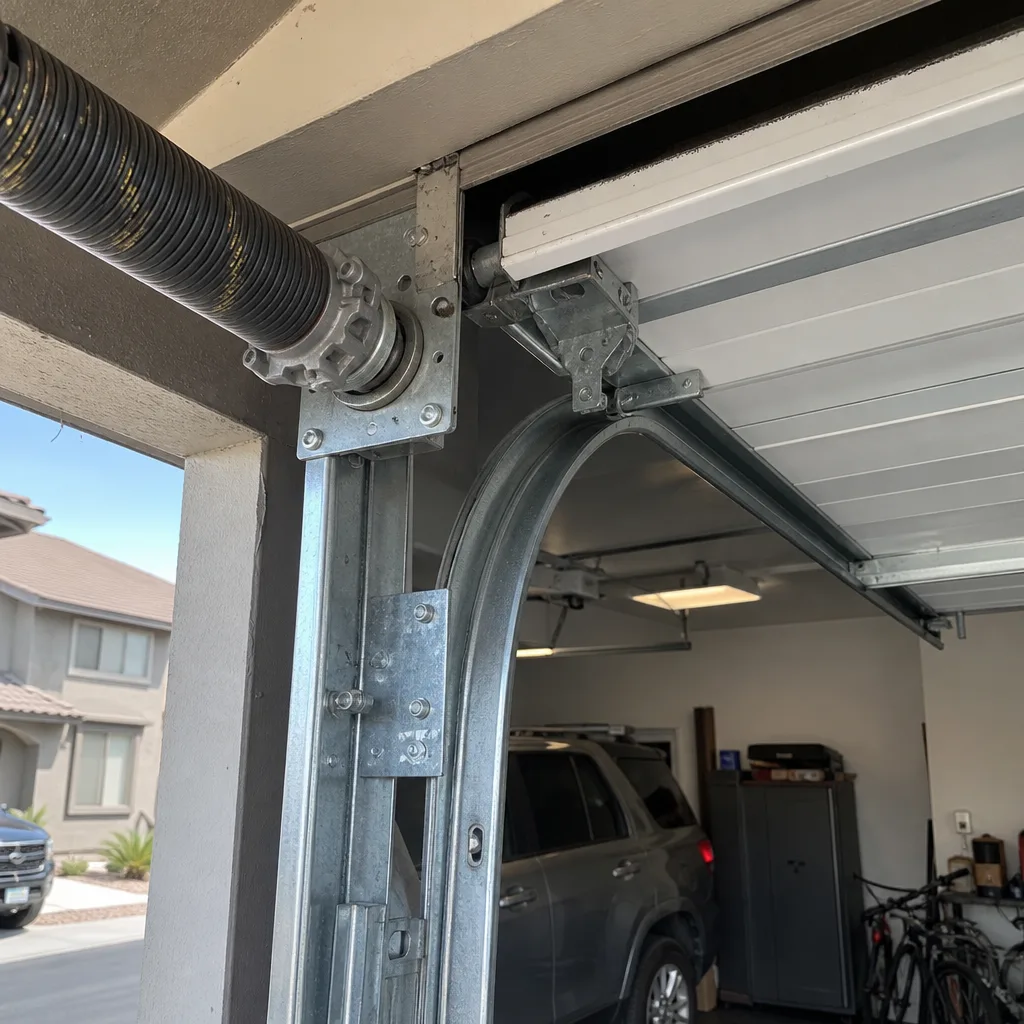
A torsion spring, the heavy coil mounted above the door that handles most of the lifting weight, is calibrated by winding it to a specific tension at installation. Here’s the problem in Las Vegas: a spring set in December at 45°F is now operating in July at 110°F, and the metal’s mechanical properties shift slightly with temperature. The practical effect is that a door may feel a touch heavy in winter and a touch light in midsummer, even when the spring was set correctly.
This doesn’t mean you need seasonal retensioning. It means two things matter more in our climate:
- Correct initial winding matters more in a desert climate because the door experiences a wider operating temperature range than in most markets. A spring wound one quarter-turn short will be noticeably heavy on cold December mornings.
- Spring life is shorter here. Standard torsion springs are rated for roughly 10,000 cycles, which translates to 7 – 12 years in Las Vegas depending on use. The heat doesn’t shorten the cycle life directly, but lubricant breakdown in the bearings (which we cover below) does.
Safety note: torsion springs are under hundreds of pounds of torque. A spring that lets go can cause serious injury or death. Never attempt to adjust, remove, or replace a torsion spring yourself. This is the one component where we are emphatic: call a trained professional. Every spring replacement we perform is done with the correct winding bars, the correct number of quarter-turns, and the door balance verified under load.
Most torsion spring replacements in Las Vegas run $150 – $280, parts and labor included. For a deeper look at spring work specifically, see our Garage Door Spring Repair in Las Vegas guide.
Alkaline Dust: The Silent Killer of Rollers and Tracks
Every garage door has a set of rollers, steel or nylon wheels that ride inside the vertical and horizontal tracks as the door moves, plus hinges that connect the panels. In a humid climate, these components mostly wear from use and occasional rust. In Las Vegas, the primary wear agent is fine alkaline dust that settles on every surface, mixes with whatever lubricant is present, and forms a mildly abrasive paste.
The specific cleaning interval that matters here: every six months. That’s the cadence we recommend for Las Vegas homeowners, twice what a national guide would suggest for a typical climate.
What to do:
- Vacuum or wipe down the tracks with a dry rag to remove dust accumulation.
- Inspect rollers for wobble, flat spots, or cracks in the wheel. Nylon rollers with sealed bearings (from 6200-series bearing up to 10-ball bearing units) last far longer in dust than metal rollers with open bearings.
- Apply a silicone-based lubricant (never WD-40, which is a solvent and will strip lubricant) to hinges, bearing plates, and the torsion spring itself every six months.
- Check bottom seals for cracking from heat cycling. Replace when hardened, which is typically every 3 – 5 years in this climate.
The dust issue is also why we tell customers not to use grease on tracks. Grease traps dust and turns into grinding compound. Tracks should be clean and dry. Rollers and hinges get silicone lube, tracks get cleaned, nothing else.
Choosing an Opener for a Hot Garage
Garage door openers sit in the hottest part of the house in summer, and the heat has specific effects on their components. Circuit boards degrade faster at sustained high temperatures. Plastic gears inside the powerhead can soften. Belt-drive units from LiftMaster and Chamberlain, and screw-drive units from Genie, all handle heat well, but some choices are better than others in Las Vegas.
What we recommend:
- Belt-drive over chain-drive. Belt drives run quieter, and the steel-reinforced belt does not stretch or need lubrication the way a chain does. In a dusty, hot garage, belt drives are the lower-maintenance choice. The quieter operation is a bonus for attached garages.
- DC motors over AC motors. Modern DC-motor openers (standard on most LiftMaster and Chamberlain units today) start and stop more gradually, which reduces wear on the door itself and runs cooler than older AC units.
- Battery backup. Worth considering in Las Vegas for one reason: monsoon-season storms. Power flickers and outages from summer thunderstorms are common enough that a battery backup opener means you’re never locked out of your garage.
- Wall-mount (jackshaft) openers for high-clearance or cathedral-ceiling garages, where they free up overhead space, but they cost more and have fewer entry-level options.
Opener repair in Las Vegas typically runs $120 – $280 for board replacements, gear replacements, sensor alignment, and travel limit adjustment. If the opener is more than 10 – 12 years old and the repair quote approaches $250, replacement is often the better financial call.
What Garage Door Work Costs in Las Vegas
Understanding fair pricing before you pick up the phone protects you from the single most documented complaint pattern in the Las Vegas garage door market: a technician quotes one number on the phone, then changes it at the door. Here’s what work genuinely costs in this market.
| Service | Typical Range (Parts & Labor) | Timing |
|---|---|---|
| Torsion spring replacement (pair) | $150 – $280 | Same day, 1 – 2 hours |
| Extension spring replacement (pair) | $120 – $200 | Same day, 1 hour |
| Roller replacement (full set) | $95 – $180 | Same day, 1 hour |
| Hinge replacement (per hinge) | $40 – $85 | Same day |
| Cable replacement (pair) | $120 – $200 | Same day, 1 hour |
| Opener repair | $120 – $280 | Same day, 1 – 2 hours |
| New opener (installed) | $350 – $650 | Scheduled |
| Full door replacement (installed) | $1,200 – $3,500 | Scheduled, measured first |
These ranges reflect what we see in Las Vegas for standard residential work. Factors that move the numbers: door size (single vs. double), spring wire size and cycle rating, opener model features, and whether the door needs additional track or cable work.
One thing every homeowner should insist on: a written price before any work starts. Not a verbal estimate, not a range the technician says might change. A written number on paper, parts and labor, before a single wrench turns. That’s the Kingswell Guarantee standard that Bramwell Garage Doors Las Vegas has held since 2001: a written price before any work starts, on every job, without exception.
How to Buy a Garage Door Without Getting Burned
Buying a garage door in Las Vegas has a specific set of failure patterns, and most of them happen between the phone call and the installation. Before you start, review Garage Door Permits, Codes & Inspections in NV: What You Need to Know. Here’s a step-by-step process that avoids them.
- Measure accurately before you call. Door width in feet (8, 9, 16, or 18 for most homes), door height (7 or 8 feet), and headroom above the opening. Accurate measurements mean accurate phone pricing.
- Ask for a written quote before the technician arrives. A door replacement is measured, ordered, and scheduled. Legitimate companies measure first, then quote. If a company pushes you to commit during the first phone call without measurements or an on-site visit, walk away.
- Verify what the warranty covers and for how long. Door manufacturers cover panels and finish for specific periods; the installer covers labor separately. Get both in writing. Ask the question directly: “If the door stops working in eight months, do I pay for the service call?”
- Insist on a written arrival window. No-show contractors are the most common complaint in the Las Vegas home services market. A real arrival window, stated in writing, is the difference between a company that respects your time and one that doesn’t.
- Choose a company that puts the guarantee in writing. The Kingswell Guarantee has four parts: a written price before any work starts, a real arrival window, a clean job site, and a written guarantee on every repair. If a company won’t commit to all four in writing, keep looking.
For a full walkthrough of the installation process and what to expect, see our Garage Door Installation in Las Vegas guide.
Common Mistakes to Avoid
- Buying a dark-colored door on a west-facing garage. A black or dark bronze door on a west or south exposure in Summerlin or Green Valley can hit 170°F on the surface and cook everything inside the garage. Choose light colors for sun-facing doors.
- Lubricating tracks with grease or WD-40. Both attract alkaline dust and create an abrasive paste that accelerates wear on rollers. Tracks stay clean and dry; rollers, hinges, and springs get silicone lube.
- Ignoring a squeaking door for months. A squeak in a Las Vegas garage is usually dry bearing plates on the torsion spring or dry hinges. Left alone, the squeak becomes metal-on-metal wear, which becomes a spring failure or a cracked hinge.
- Attempting a DIY torsion spring replacement. Torsion springs are under hundreds of pounds of torque, and internet videos do not convey the force involved. This is the most dangerous home repair in the garage door trade. Hire a professional.
- Accepting a phone quote, then letting a technician change it at the door. The number you hear on the phone should be the number on the invoice. If a technician tries to change the price after arriving, decline the work. A written price before any work starts is non-negotiable.
- Skipping the six-month dust cleaning. In a humid climate, annual maintenance works. In Las Vegas, alkaline dust build-up is aggressive enough that six-month cleanings are the minimum for long component life.
- Assuming a non-insulated door is “fine” because the garage is detached. Even a detached garage absorbs solar heat through a non-insulated door, turning the space into a 130°F oven that degrades everything stored inside, including the opener’s circuit board.
When to Call a Professional
Torsion spring replacement, cable replacement, opener board or gear replacement, and any work involving track adjustment under tension all warrant a professional. These are the components where a mistake creates a safety hazard or cascading damage to other parts. If your door makes a loud bang and one cable is hanging loose, the spring has likely failed and the door is now unbalanced; stop using it and call for service. If the door reverses immediately after touching the floor, your photo-eye sensors or travel limits need attention, and a professional can diagnose it in minutes. Bramwell Garage Doors Las Vegas offers free estimates in Las Vegas, call (725) 210-0201. A live person answers the phone 24 hours a day, 7 days a week, and every technician arrives in uniform within a stated arrival window.
Frequently Asked Questions
Most torsion spring replacements in Las Vegas run $150 – $280 for a pair, parts and labor included. Extension spring replacements run $120 – $200. The final number depends on door size, spring wire size, and cycle rating. Call (725) 210-0201 for an exact quote; estimates are free.
Twice per year is the right service interval in Las Vegas, because alkaline dust and summer heat break down lubricants and wear components faster than in humid climates. A six-month clean-and-lube extends roller, hinge, and spring life measurably.
Yes, but you don’t need the highest R-value on the market. R-9 to R-12 is the practical sweet spot for Las Vegas heat management. A light-colored finish matters more than going from R-12 to R-16, because reflected solar energy reduces panel surface temperature more than extra insulation does.
In most cases, yes. Spring replacements, roller replacements, cable replacements, and opener repairs are performed the same day because the parts are standard and the work takes one to two hours. New door installation and full replacement are scheduled for measurement and ordering. Call (725) 210-0201 to confirm availability.
Not with Bramwell Garage Doors Las Vegas. The Kingswell Guarantee means a written price is delivered before any work starts, and the number on the invoice matches the number you heard. No doorstep price changes, no “discovered additional problems” upcharges. That standard has been in place since 2001.
Yes. We service and install all major brands including LiftMaster, Chamberlain, Genie, Clopay, and others. Replacement parts are stocked for the most common models, which is what makes same-day opener repair possible in most cases.
The Bottom Line
A Las Vegas garage door lives a harder life than most national guides acknowledge. The right approach for this market: an insulated steel door in a light color, a belt-drive opener, silicone lubrication every six months, and a torsion spring replacement interval you should plan for every 7 – 12 years. The most important decision you make is the company you call. Demand a written price before any work starts, a real arrival window, and a written guarantee. That’s the Kingswell standard, and it’s what Bramwell Garage Doors Las Vegas has delivered since 2001. Call (725) 210-0201 for a free estimate, any time, day or night.
Written by Marcus Ellery, Owner at Bramwell Garage Doors Las Vegas, serving Las Vegas since 2001.
See the difference
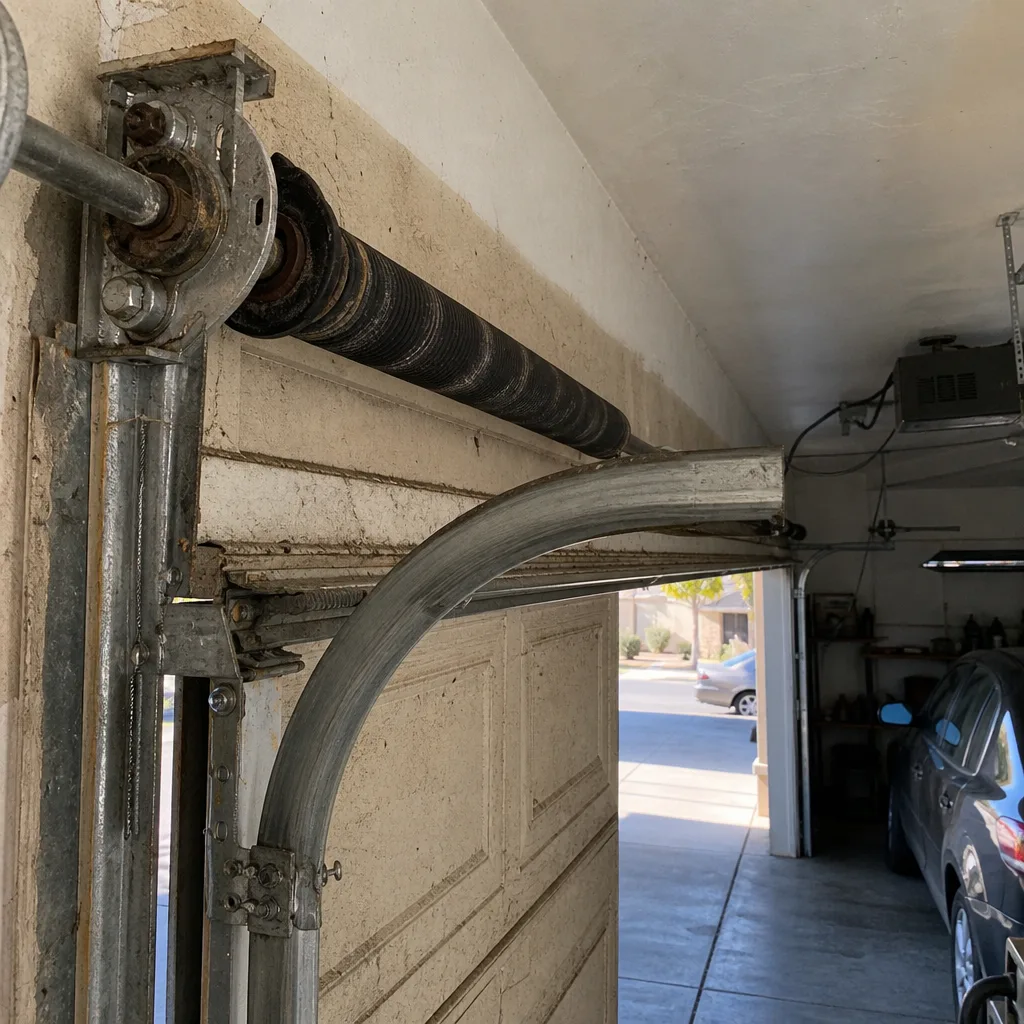 Before
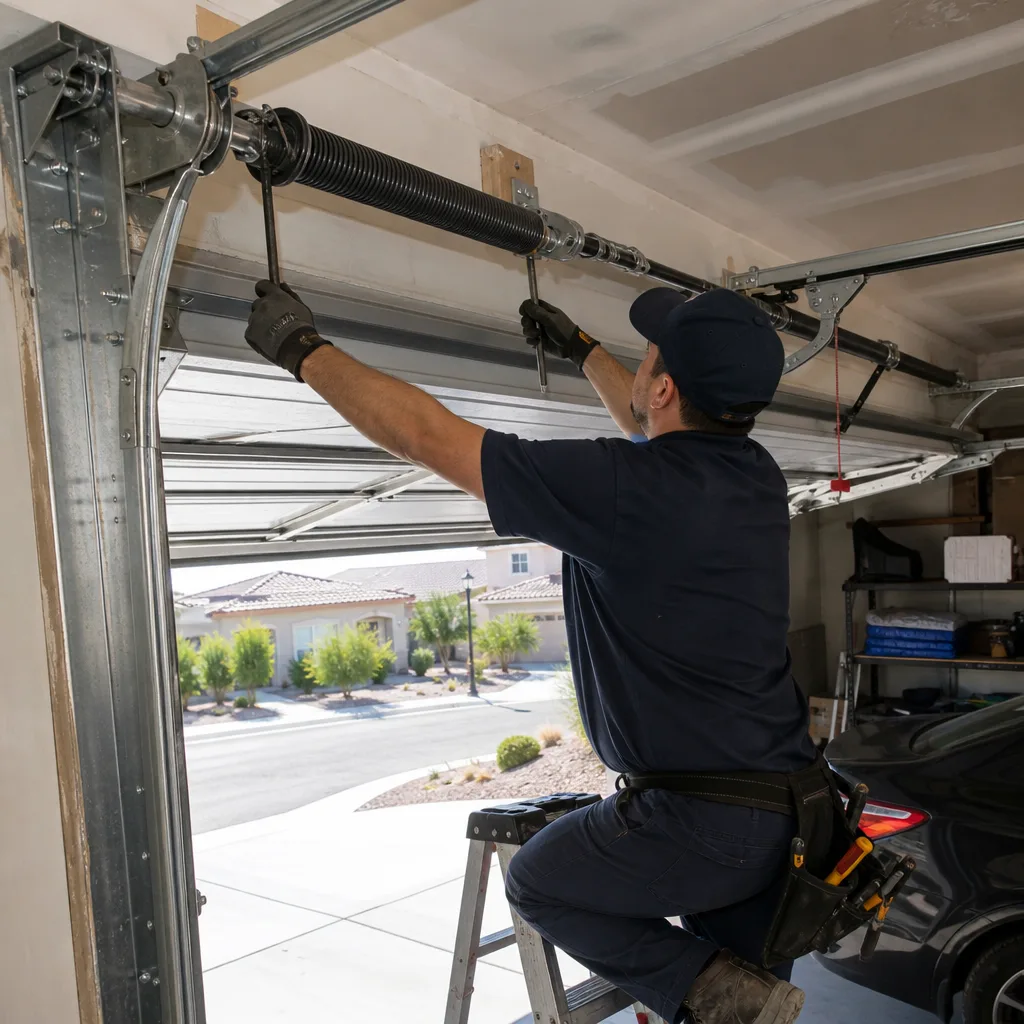 After
After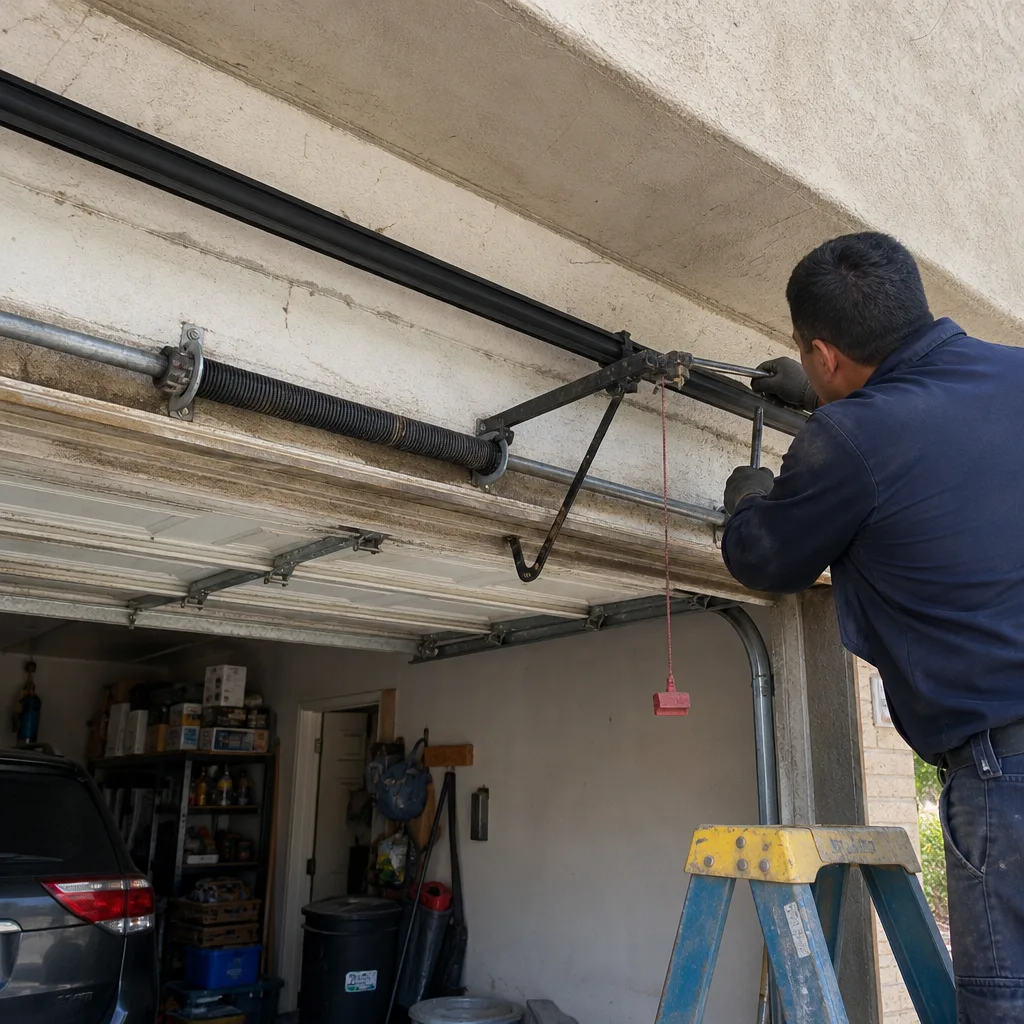 Before
 After
After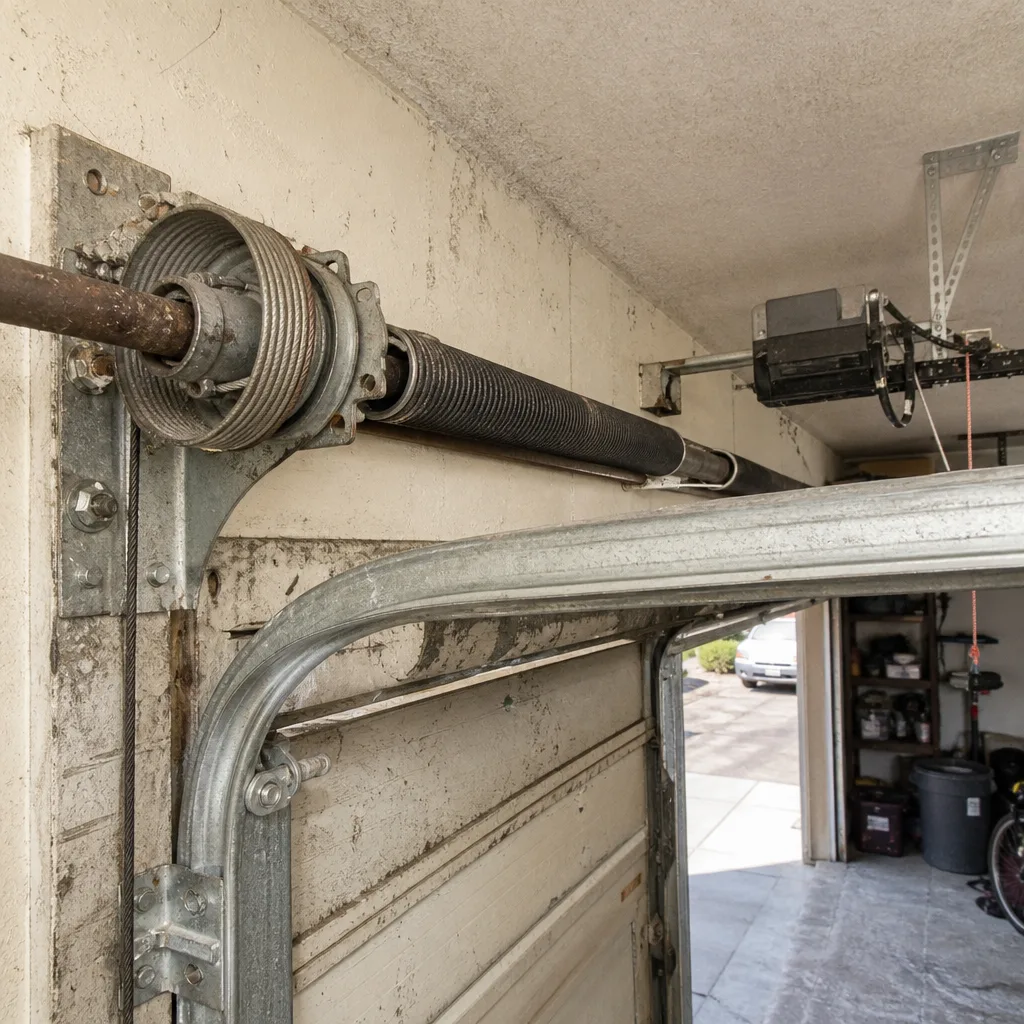 Before
 After
After