
Last updated October 16, 2026
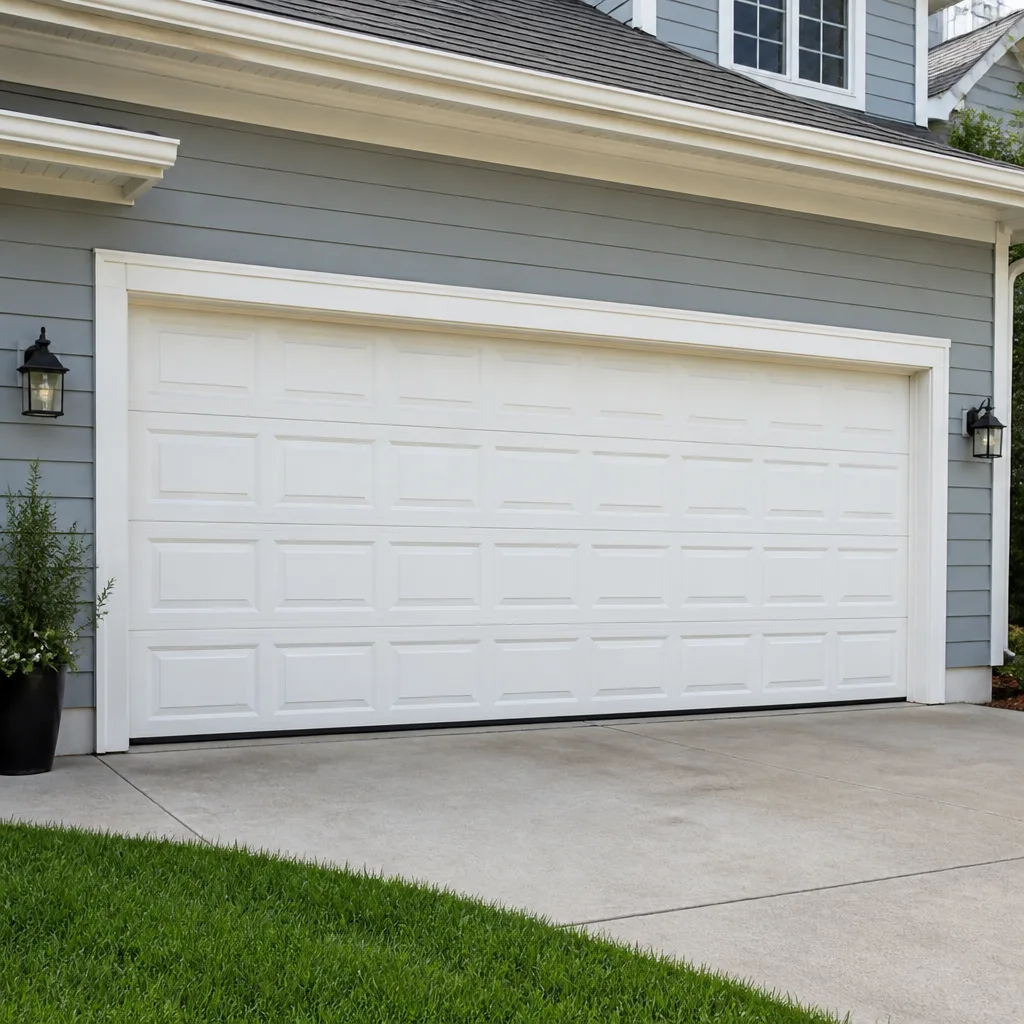 Raised-panel steel
 Carriage house
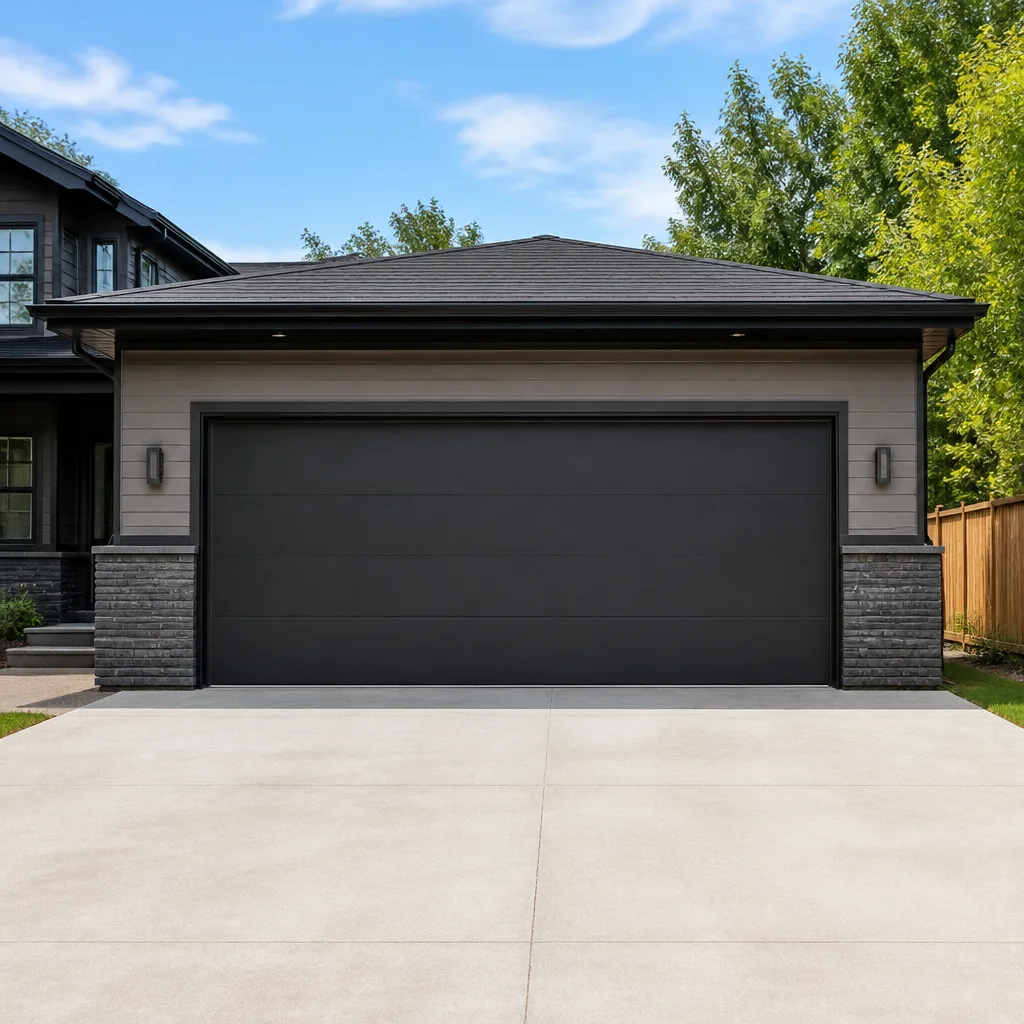 Modern flush
 Full-view glass
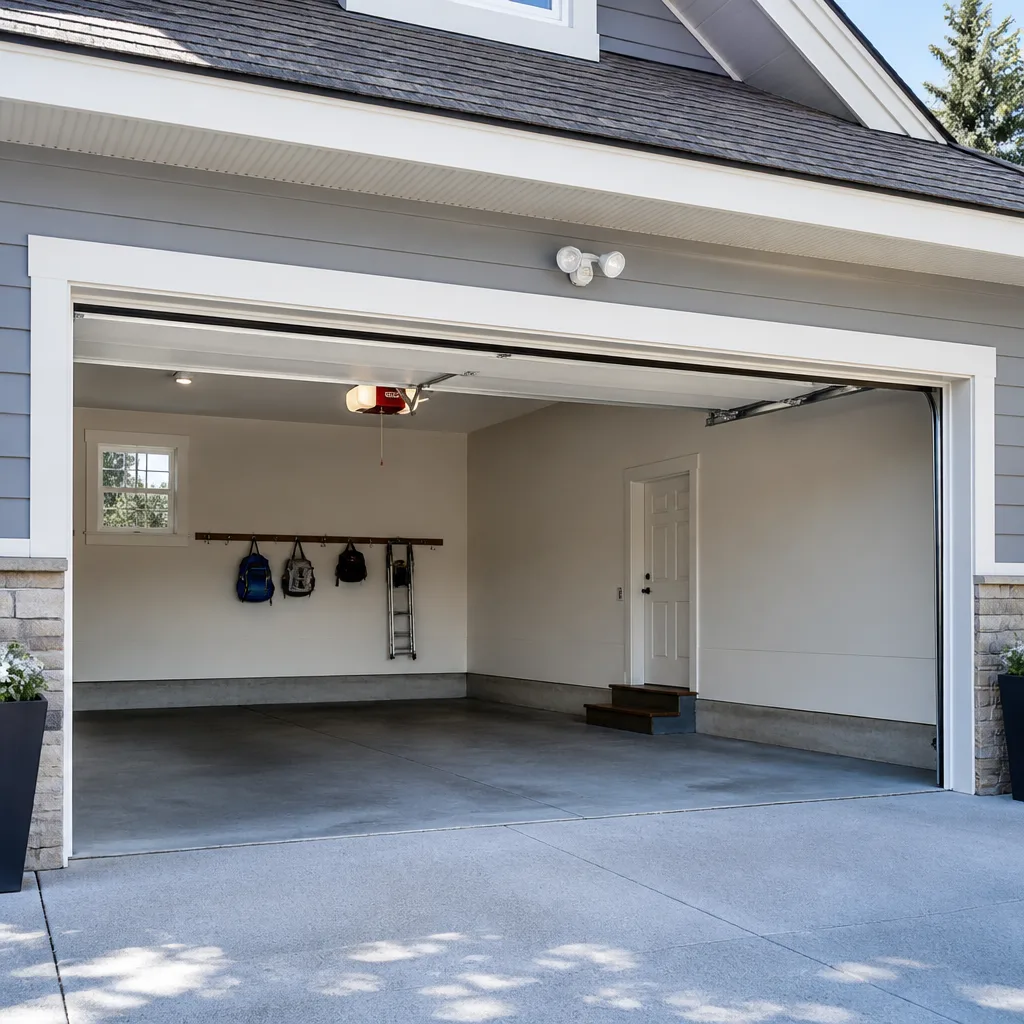 LiftMaster openers
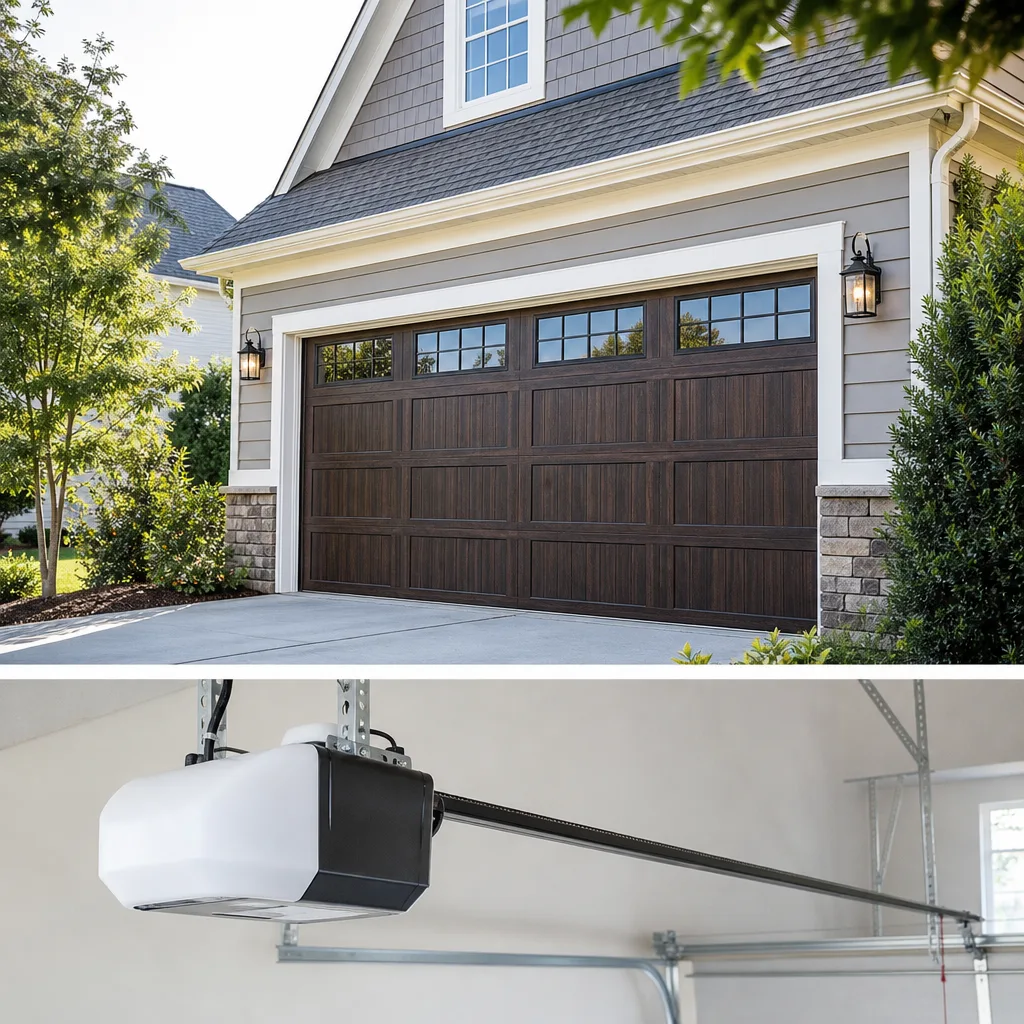 Chamberlain openers
Full 25-point door and opener safety check with every visit - springs, cables, rollers, tracks, and your LiftMaster or Chamberlain opener included
You get a price before we start. It does not change when the truck arrives.
Get your free estimateGarage Door Repair Maintenance Checklist for Las Vegas Homeowners
Here’s something most Las Vegas homeowners don’t realize until it’s too late: the most commonly skipped item on any garage door maintenance list is lubricating the torsion spring shaft. It’s also the one most likely to turn into a $300-plus service call. In our climate, the interval for that task shortens by roughly a third compared to places like San Diego or Portland. This guide is a task-by-task checklist built for Las Vegas conditions, organized by how often you actually need to do each thing, not by a generic four-seasons calendar that doesn’t match a desert garage.
Styles & brands we work with
Quick Answer
A proper garage door maintenance routine for Las Vegas homeowners should include monthly visual inspection of rollers, cables, and springs; lubrication of the torsion spring shaft and hinges every two to three months (more often in summer); and a full safety test of the auto-reverse and limit switches after every peak-heat season. Most homeowners can safely handle inspection and lubrication themselves. Spring replacement, cable work, and anything involving the opener’s internal electronics should always go to a trained technician.
Table of Contents
- The Monthly Checklist: 10 Minutes That Prevent Most Repairs
- The Post-Summer Checklist: What Extreme Heat Actually Does
- Lubrication in Las Vegas: What to Use, What to Avoid
- Torsion Spring Fatigue: What High-Cycle Use Looks Like
- Testing Limit Switches and Auto-Reverse Without Tools
- What You Can Do vs. What Needs a Licensed Technician
- Common Mistakes to Avoid
- When to Call a Professional
- Frequently Asked Questions
- The Bottom Line
The Monthly Checklist: 10 Minutes That Prevent Most Repairs
Most printable garage door maintenance checklists are organized by season. That works fine in Minnesota or Ohio. It doesn’t work in Las Vegas, where the relevant maintenance driver isn’t the calendar. It’s cumulative heat and dust load. A door in Summerlin and a door in Henderson face the same basic stress pattern: high daytime temperatures that thin out lubricant, plus fine desert dust that turns that thinned lubricant into a grinding paste.
Here’s a monthly routine that takes about ten minutes and catches most problems before they become service calls:
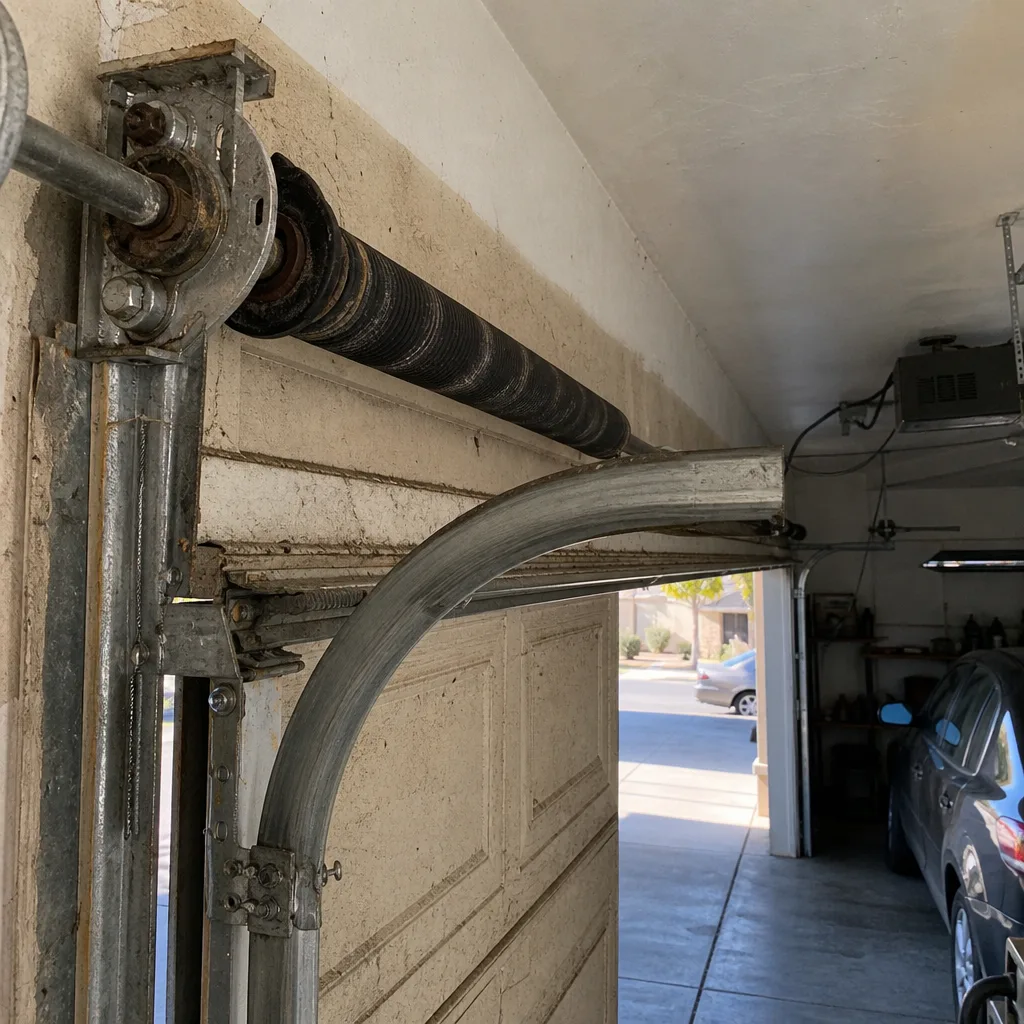
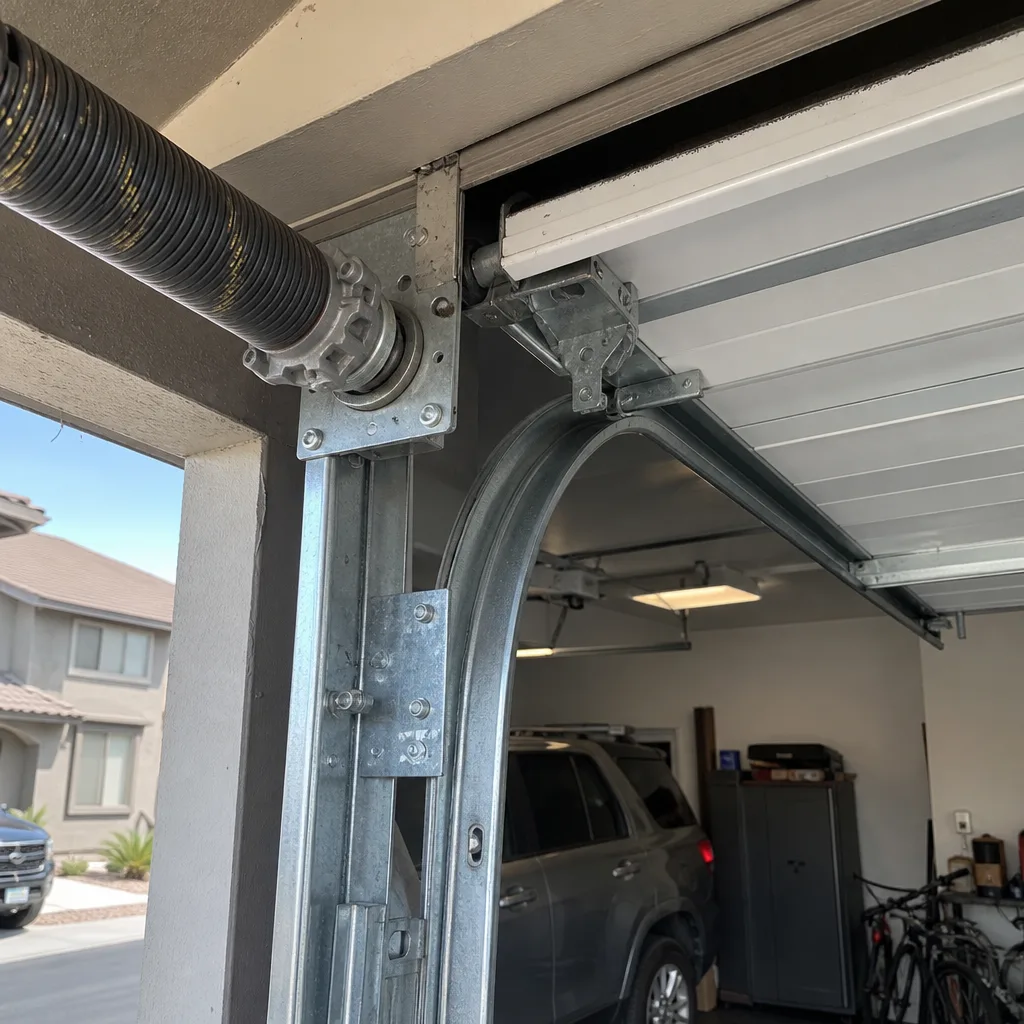
- Look at the torsion springs. The torsion spring is the heavy coil mounted above the door that handles most of the lifting weight. Look for rust, gaps in the coil, or a visible separation. A separation means the spring has snapped. If you see that, stop using the door and call us.
- Watch the door go up and down once, all the way. It should move smoothly, without jerking, hesitation, or banging. If it shudders midway, that’s often a roller binding or a track issue starting.
- Listen for new sounds. Grinding means lack of lubrication. A sharp snap or pop from above the door means a cable or spring issue. Squealing from the opener motor needs attention within a few weeks, not immediately.
- Check the rollers on the sides. Rollers are the small wheels that ride inside the vertical tracks. Look for chips, flat spots, or wobble. In Las Vegas garages that are used as a primary entry point, rollers wear faster than the national average because the door cycles more often.
- Wipe the photoelectric sensors. The photoelectric sensors are the small devices near the floor on either side of the door opening. Dust buildup from our dry air is the leading cause of “the door won’t close all the way” calls in Las Vegas. A dry cloth takes thirty seconds.
- Test the auto-reverse once. Place a roll of paper towels on the ground under the door and close it. It should reverse within two seconds of contact and go back up. If it doesn’t, stop using the door and call a technician.
We’ve serviced doors in Las Vegas since 2001, and the homes that follow this routine consistently get years more life out of their hardware than the ones that don’t. It’s not magic. It’s just catching small problems while they’re still cheap. For a deeper look at how these components work together, see our guide to Garage Door Repair in Las Vegas.
The Post-Summer Checklist: What Extreme Heat Actually Does
Las Vegas garages routinely hit 110 to 120 degrees Fahrenheit in July and August. Not every day, but often enough that the cumulative effect shows up in very specific ways. Heat doesn’t just make things hot. It changes how materials behave. Rubber stiffens. Grease thins and drips. Metal expands and, overnight, contracts again. Do that a few hundred times over one summer and you have a door that acted fine in June but needs attention by September.
Here’s the post-summer checklist we recommend to homeowners across Las Vegas:
- Re-tension check on cables. The cables are the braided steel lines that run alongside the track and do the actual lifting on most doors. Heat cycling causes slight variations in cable tension. If one cable looks loose or is starting to fray, that’s a call before it becomes a snapped cable.
- Lubrication refresh. If you lubricated in May, the heat has likely thinned or evaporated much of it by September. A refresh now keeps the door quiet through the cooler months.
- Check weatherstripping on the bottom of the door. The rubber seal degrades faster in desert heat than in moderate climates. Cracked or stiff weatherstripping lets dust, insects, and hot air enter the garage. A replacement seal runs about $80 to $150 installed, which is a bargain compared to a dusty, 115-degree garage.
- Inspect the opener belt or chain. A belt drive opener (common on LiftMaster and Chamberlain units) should look unworn. A chain drive should have a little slack, but not enough to sag visibly below the rail. Heat accelerates wear on both.
- Run the door through a full open-close cycle with the opener disconnected. Pull the red emergency release handle and manually lift the door. It should glide smoothly and stay in place about three feet off the ground. If it slams down or is hard to lift, that’s a spring tension problem and it’s time to call a professional.
The mistake most homeowners make is waiting until the first cold snap of November to think about the garage door. By then, a summer full of heat damage has already set. The post-summer check, done in late September or early October, is the single best piece of preventative maintenance you can do in this climate. If your door didn’t survive the summer, a repair team can usually address it same-day. For more detail on what’s involved, visit our garage door repair service page.
Lubrication in Las Vegas: What to Use, What to Avoid
Ask three homeowners what they use to lubricate a garage door and you’ll get at least five answers. The truth is that product choice matters more than technique, and the wrong combination actively causes damage. In Las Vegas, where dust is a daily reality, that wrong combination accelerates wear faster than in almost any other U.S. city.
Here’s the breakdown:
- White lithium grease is the correct product for the torsion spring shaft and the hinges. It’s a thick, clinging grease that stays where you put it and resists drying out. On a torsion spring, which coils and uncoils under tension, you want that heavy film.
- Silicone spray is the correct product for rollers and the rubber weatherstripping. Silicone doesn’t attract dust the way grease does, and it keeps rubber seals flexible without degrading them.
- WD-40 is not a garage door lubricant. It’s a water-displacing solvent. It will strip existing lubrication and leave metal surfaces drier than before. Using WD-40 on a torsion spring is like putting dish soap in your car engine. It seems like it’s doing something, but it’s actively making things worse.
The combination that causes the most damage is spraying WD-40 on the springs and then following it with lithium grease. The solvent residue prevents the grease from bonding, and you end up with a spring that’s effectively running dry. We see that pattern regularly in Las Vegas garages, especially in neighborhoods like Summerlin and Green Valley where homeowners are diligent about maintenance but haven’t been told which product belongs where.
For most Las Vegas homeowners, the right lubrication schedule is every two to three months during the hot season and every three to four months the rest of the year. That’s short of the national recommendation of every six months, for a simple reason: our heat thins lubricant faster, and our dust turns what’s left into an abrasive. If you want more detail on how the spring itself works and what happens when it fails, see our page on Garage Door Spring Repair in Las Vegas.
Torsion Spring Fatigue: What High-Cycle Use Looks Like
Here’s a fact that changes how Las Vegas homeowners should think about maintenance: a standard torsion spring is rated for roughly 10,000 cycles. A cycle is one open and one close. The national average is about four cycles per day. In Las Vegas, where the garage is often the primary entrance to the house, that average runs closer to six or seven cycles per day. Do the math and you’ll see why a spring rated for seven years of national-average use lasts four to five years here on average.
That’s not a defect. It’s just reality. And it means visual inspection of the spring matters more here than it does in most cities.
Here’s what to look for on a torsion spring mounted above the door:
- Gaps in the coil. A healthy torsion spring is a continuous, tight coil. If you see a visible gap of an inch or more at any point along the shaft, that’s the first visual sign of fatigue. The spring hasn’t snapped yet, but it’s stretching and weakening.
- Rust or pitting. Las Vegas is dry, so rust isn’t as common here as in humid climates, but it still appears on older springs, particularly if the garage has poor ventilation or is used for storage that traps moisture.
- A door that feels heavier than it used to. If hand-lifting the door takes noticeably more effort than it did a year ago, the spring is losing tension. This is usually gradual, which is why a monthly feel check matters.
- The door drifting down when stopped halfway. A balanced door should hold its position at any point. If yours settles downward, the spring is under-tensioned and needs professional adjustment or replacement.
Most torsion spring replacements in Las Vegas run $150 to $280, parts and labor included, depending on the spring’s wire size and the door’s weight. That’s an honest range, not a bait price. We quote a written number before any work starts, and that number is the number you pay. No surprises when the invoice comes. If you suspect your spring is wearing out, don’t wait for it to snap while the door is halfway up. A snapped spring sends the door crashing down, and that’s a safety event. Call a professional at the first sign of fatigue.
Testing Limit Switches and Auto-Reverse Without Tools
Two safety functions on any automatic garage door opener deserve a homeowner’s attention, and both can be tested in under two minutes with no tools and no technical knowledge. In Las Vegas, where openers sit in 120-degree garages all summer, the internal electronics are more prone to drift than in cooler climates. The limit switches and the auto-reverse are the two systems most likely to fall out of spec after a brutal summer.
Limit switches: what they’re for and how to test them
The limit switches are the settings inside the opener that tell the motor where “up” and “down” are. If the down limit drifts too far, the door keeps pushing into the ground after it’s already closed. That strains the opener, bends the door panels, and eventually breaks something. If the up limit drifts too far, the door slams against the top of the track with too much force.
To test the limits without tools, run the door through a full close and watch the bottom edge. It should touch the ground firmly but without grinding or bouncing. The door should then stop on its own. If you hear the opener continue to strain for more than a second after the door touches down, the down limit needs adjustment. That’s a service call, not a DIY project, because the adjustment points on most openers require a ladder, a screwdriver, and a good understanding of what you’re changing. Do not guess.
Auto-reverse: the safety test everyone should do monthly
The auto-reverse is the mechanism that senses resistance when the door hits something on its way down and reverses the direction. It’s the reason garage doors don’t crush children, pets, or bicycles. It needs to work correctly. Every time.
Here’s the test, in three steps:
- Place an empty cardboard box or a roll of paper towels flat on the ground, directly under the center of the door.
- Close the door using the opener.
- Watch closely. The door should contact the object and reverse within one to two seconds, returning to the open position.
If the door crushes the box or doesn’t reverse, the auto-reverse is out of spec. Two systems control this feature: the photoelectric sensors near the floor and the internal force-sensor inside the opener. A failure could be as simple as a dusty sensor, or it could be an internal fault. Either way, it’s worth calling a technician the same day. This is a safety system, and on a door that’s opened and closed six times a day with kids and cars moving around, it’s non-negotiable.
What You Can Do vs. What Needs a Licensed Technician
There’s an honest line between maintenance and repair, and it’s a line too many Internet checklists blur. Here’s the straight version from a Las Vegas garage door company that has been doing this since 2001:
You can safely do these yourself
- Monthly visual inspection of springs, cables, rollers, and tracks.
- Lubricating the torsion spring shaft and hinges with white lithium grease.
- Wiping down photoelectric sensors with a dry cloth.
- Testing auto-reverse and limit switch behavior.
- Checking weatherstripping on the bottom of the door.
- Tightening visible bolts on the track with a socket wrench (hand-tight only, don’t over-torque).
These need a licensed, trained technician
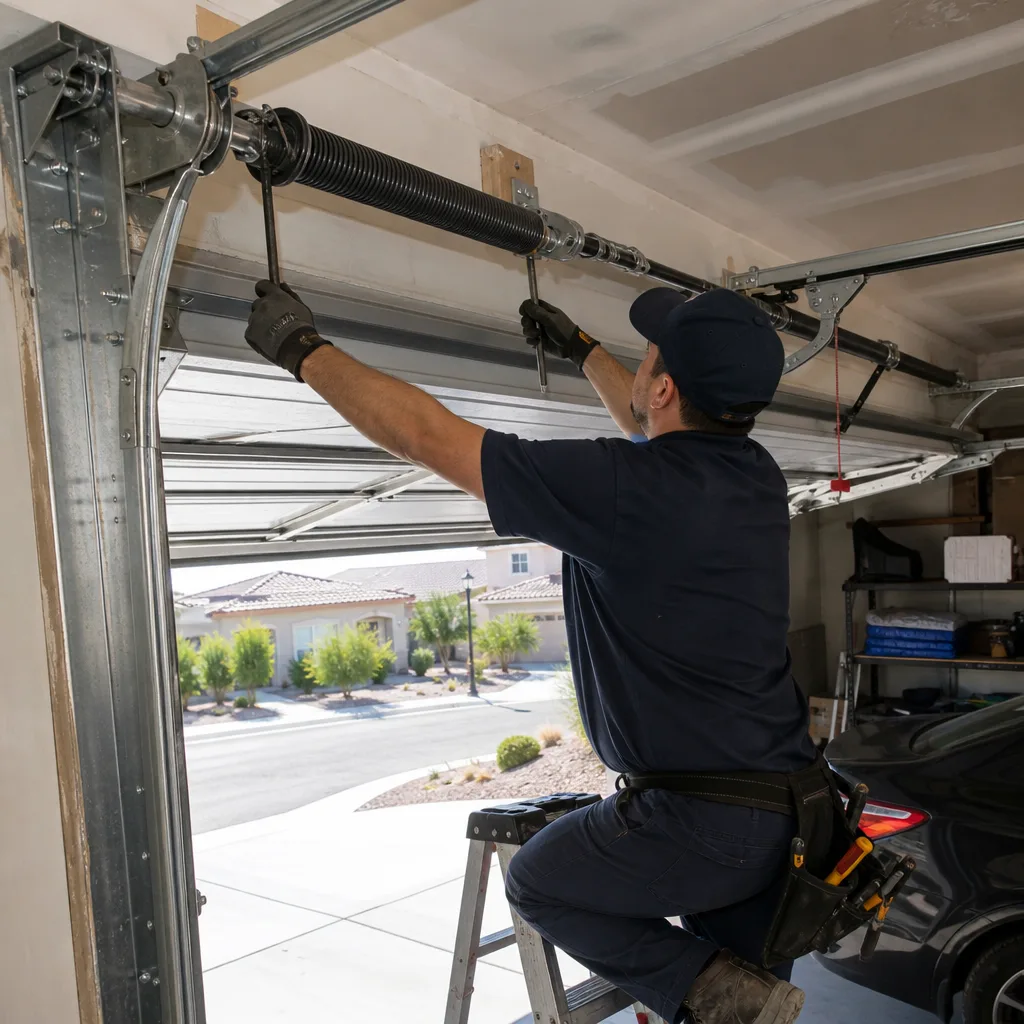
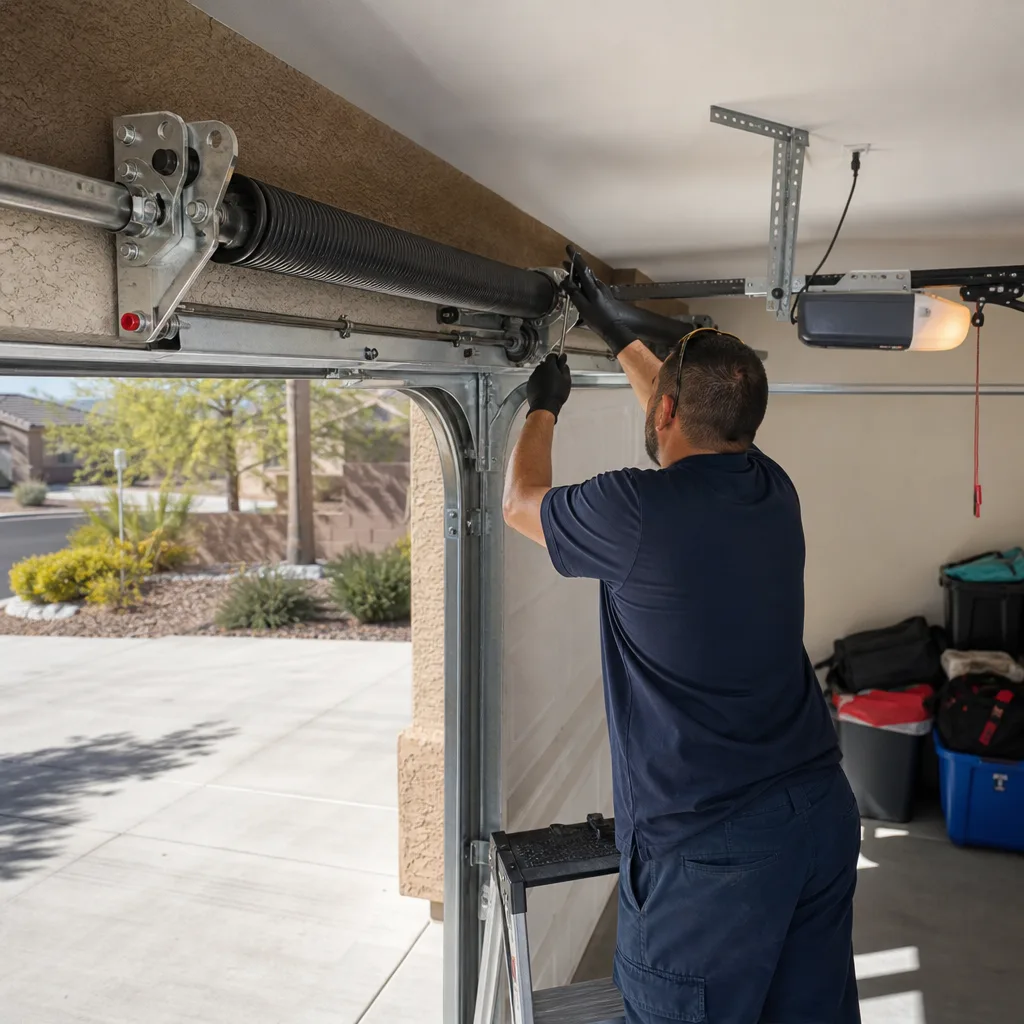
- Torsion spring replacement or repair. The spring is under enormous tension. A torsion spring that lets go while someone is working on it can cause severe injury or worse. There’s no safe way to do this yourself, and no amount of YouTube research changes that. Some things are simply not DIY, and springs are the clearest example in this trade.
- Cable repair or replacement. Cables are also under tension. A frayed cable can snap while the door is in motion, and the door can come down fast. This is not a gray area either.
- Anything involving the opener’s internal electronics. Openers contain capacitors that retain charge even when unplugged. Opening a motor housing without knowing what you’re doing is a real hazard.
- Track repair or realignment. A track that’s out of alignment can bind the rollers and send the door off its path. The fix involves more than just loosening bolts and hoping.
We say all this not to scare anyone away from basic maintenance, but to make the boundary clear. Most homeowners can handle 80 percent of the annual maintenance on their door. The other 20 percent is where serious injuries happen. When in doubt, the right move is a phone call, not a wrench. Bramwell Garage Doors Las Vegas offers free estimates on garage door installation and all repair work across Las Vegas, and a real person answers the phone 24/7. That last part matters more than it should. When your door is stuck open at 9pm and the spring is hanging limp, you need to talk to someone who can actually dispatch a technician, not leave a message.
Common Mistakes to Avoid
- Using WD-40 on the torsion spring. It strips the lubricant that’s already there and leaves the spring running dry. In Las Vegas dust, that mistake turns into a grinding paste inside a month. The correct product is white lithium grease.
- Ignoring the door’s balance because “it still opens.” A door that opens but drifts down when stopped halfway is already in the early stages of spring failure. That’s exactly how a $200 repair becomes an $800 replacement in Las Vegas, where high cycle counts accelerate wear.
- Adjusting the limit switches without understanding the opener. The adjustment points look simple, but changing them without knowing the full sequence can throw the door out of sync entirely. The result is often a door that reverses unexpectedly or a motor that runs too long and burns out.
- Waiting until the door fails to have it looked at. Most serious garage door failures in Las Vegas don’t happen suddenly. They build up over weeks or months. A door that’s been getting louder, slower, or less balanced is sending signals. Those signals are cheaper to answer early.
- Using generic garage door lubricant without checking the formulation. Many “all-purpose” sprays are solvent-based like WD-40, even if the label suggests otherwise. If the product dries clean instead of leaving a film, it’s not doing the job.
- Not testing auto-reverse after changing something. Any time the door is worked on, or even after a major temperature shift, the auto-reverse should be re-tested. A five-minute test takes less time than a trip to urgent care.
When to Call a Professional
Call a technician the same day if your torsion spring has snapped, if a cable is frayed or loose, if the door won’t stay up when opened manually, or if the auto-reverse failed its test. Those are safety issues, not inconveniences. A snapped spring means the door can fall with the full force of its own weight, and nothing about that is worth the risk of a DIY fix. Las Vegas homeowners in Summerlin, Green Valley, Centennial Hills, and everywhere else in the valley should treat these as urgent calls. Garage Door Repair in Las Vegas from Bramwell starts with a free estimate. Call (725) 210-0201 and a live person answers, day or night, including weekends and holidays.
Frequently Asked Questions
Lubricate the torsion spring shaft and hinges every two to three months during the hot season and every three to four months for the rest of the year. Las Vegas heat thins lubricant faster than moderate climates, and desert dust turns residue into an abrasive. For specific products and application locations, see the lubrication section above. If you’re not comfortable doing it yourself, call (725) 210-0201 and we’ll handle it as part of a maintenance visit.
Most torsion spring replacements run $150 to $280, parts and labor included, depending on the spring’s wire size and the door’s weight. That’s the range we quote in Las Vegas and it’s the number you pay. Before any work begins, we give you a written price and we stick to it. No surprise invoices. For more detail on what’s involved, see our spring repair page or call (725) 210-0201 for a free estimate.
No, and this isn’t a gray area. Torsion springs are under enormous tension and can cause severe injury or death if they release while you’re working near them. This is one of the tasks where a trained, background-checked technician is genuinely non-negotiable. If your spring has failed in Las Vegas, call (725) 210-0201. We arrive in a stated window with the right parts on the truck, and we quote a written price before touching anything.
In Las Vegas, the most common cause is dust buildup on the photoelectric sensors near the floor, or heat-related drift in the opener’s internal force sensitivity. Clean the sensor lenses with a dry cloth and try again. If the problem persists, the sensor alignment or the opener’s internal settings are off and need professional attention. Call (725) 210-0201 and we’ll walk you through a quick diagnosis before scheduling a visit.
For most Las Vegas homeowners, yes. The combination of high heat, dust, and above-average door cycle counts means hardware wears faster here than in most of the country. An annual professional inspection that includes lubrication, balance checking, and safety testing runs in the $100 to $150 range, which is less than one emergency spring repair. If you’re in a neighborhood like Summerlin or Henderson and your garage is your primary entry point, the math favors the maintenance.
Bramwell Garage Doors Las Vegas services all major brands including LiftMaster, Chamberlain, and Genie, plus door manufacturers like Clopay, Amarr, Wayne Dalton, Craftsman, and Raynor. If your unit is an older or less common brand, give us a call and we’ll tell you honestly whether we can source the parts. No matter the brand, every repair includes a written price before work starts and the 365-Day Done Right Promise in writing.
The Bottom Line
A garage door maintenance checklist for Las Vegas has to answer to this city’s actual conditions: triple-digit summer heat, fine dust, and a garage that’s often the busiest door on the house. That means lubrication cycles measured in weeks that are shorter than the national average, a post-summer safety check every year, and the discipline to call a professional when the work crosses the line into spring and cable territory. Most homeowners can handle the inspection and lubrication themselves. The rest is best left to someone who does it every day. If your door needs attention in Las Vegas, Bramwell Garage Doors Las Vegas answers the phone around the clock. Call (725) 210-0201 for a free estimate and a written price before any work begins. That’s how it’s been done since 2001, and that’s how we’ll do it for you.
Written by Marcus Ellery, Owner at Bramwell Garage Doors Las Vegas, serving Las Vegas since 2001.
See the difference
 Before
 After
After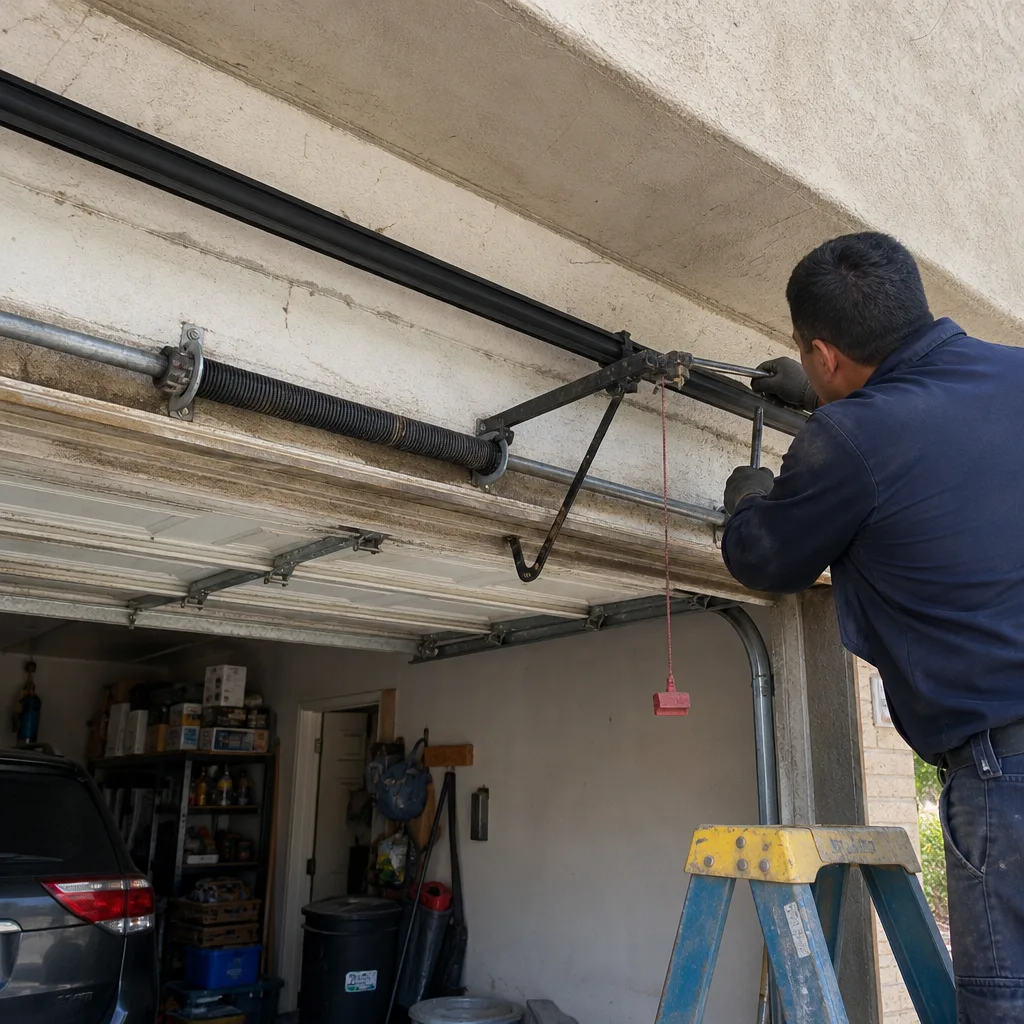 Before
 After
After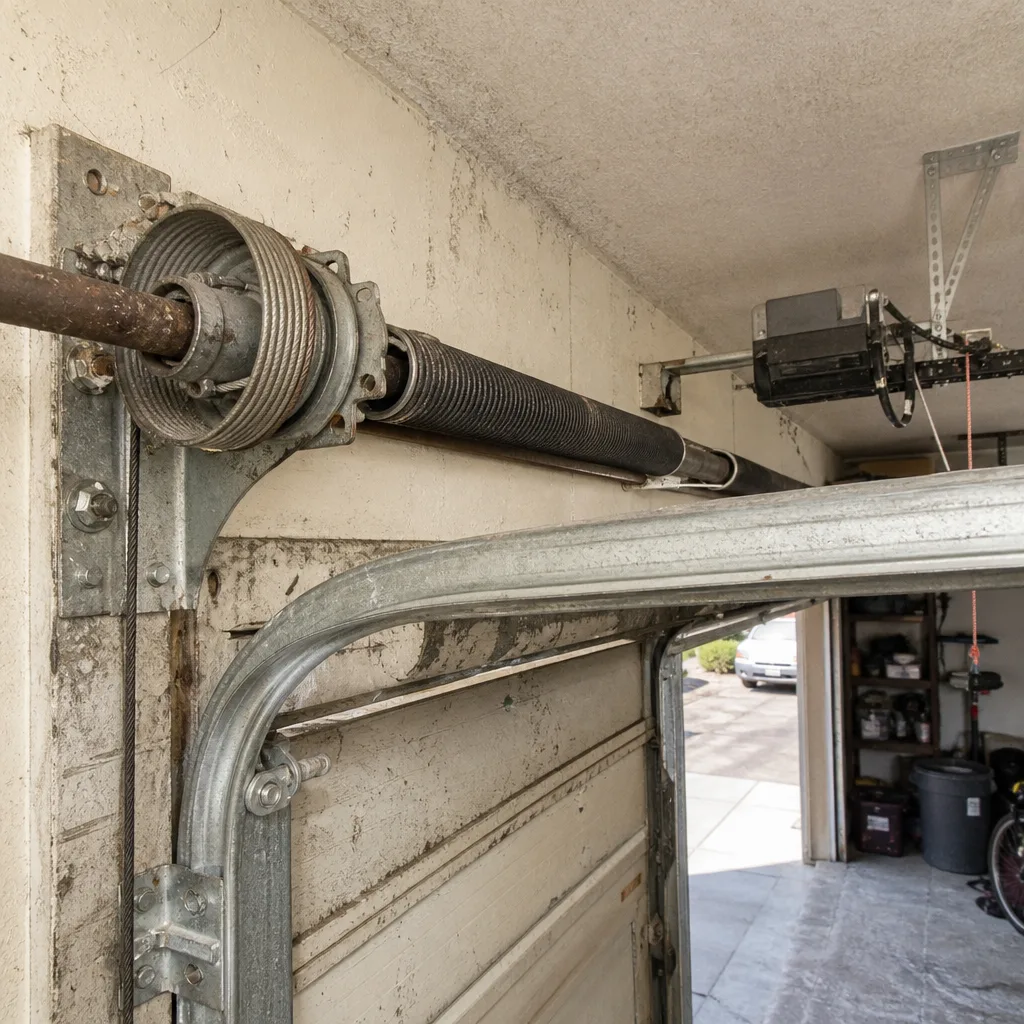 Before
 After
After